To our trusted School Food Service leaders and partners…
This issue, we’re spotlighting two farm to school champions doing things the right way. First, a deep dive into Tahoe-Truckee USD’s scratch cooking program — where every meal is made from scratch, local beef ribs are a top seller, and a decade of patient workforce investment has tripled meal participation. Then, we’re revisiting Twin Tree Farms, a small family operation bringing small fruit to school cafeterias in a big way. Two different stories, one shared conviction: real food in partnership between schools and farmers.
Tahoe-Truckee USD: Where Every School is a Scratch Kitchen
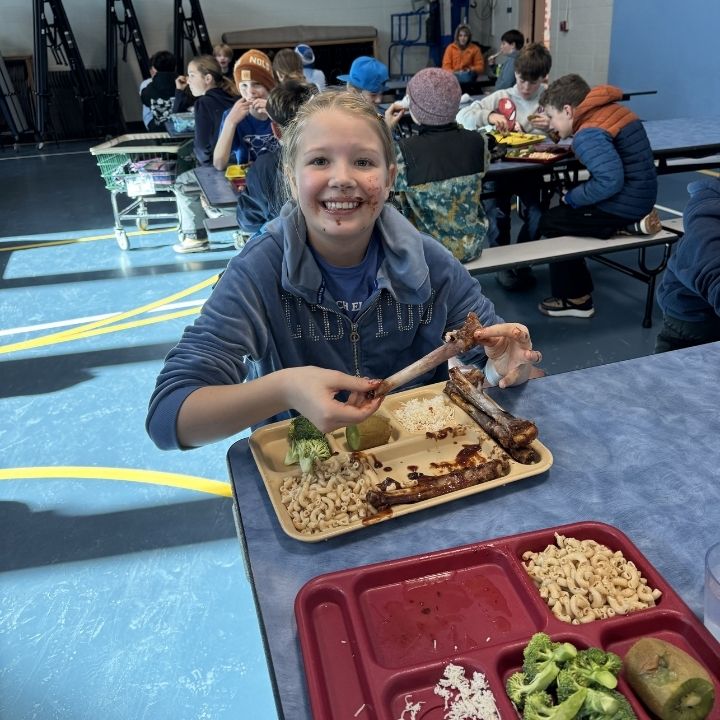
The look that says it all — Starwalker Organic Farms pork spare ribs are a TTUSD favorite
When Kat Soltanmorad became director of Food & Nutrition Services at Tahoe-Truckee USD in 2012, she inherited a program that looked like school food across the country: industrialized, under-resourced, and staffed with mostly part-time workers earning minimum wage with no benefits. She had a different vision. Local property bonds passed in 2016 made it possible to build a warehouse and Kitchen Infrastructure and Training (KIT) Funds helped update a kitchen at their Donner Summit site — piece by piece, the infrastructure needed to scratch cook at scale came together.
Today, TTUSD Food Services caters to 12 school sites — plus a charter school, Head Start, and early childhood program — all receiving the same fresh, scratch-cooked menu every day. Birria tacos that take three days to prep, pork spare ribs from Starwalker Organic and Regenerative Ranch, and whole grain breakfast muffins in a variety of flavors, where the flour is soaked in buttermilk thanks to a technique developed by a former team member, Brooke Harper.
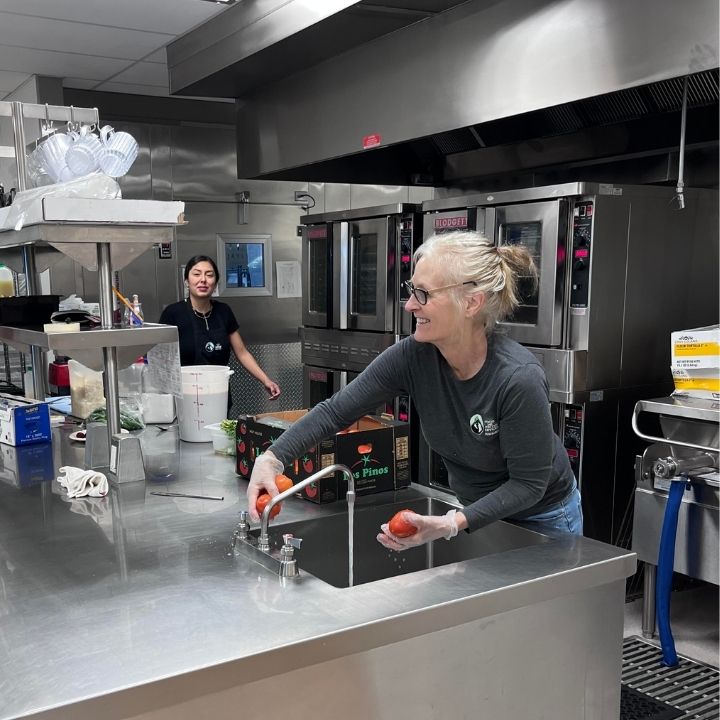
Fresh tomatoes, scratch-made salsa — just another day for a chef at TTUSD.
Investing in the workforce
Scratch cooking at this scale runs on a committed team. When Kat started, most staff were part-time with no benefits. She spent her first six months listening and observing, then worked to build the department with full time staff with eligibility for benefits. Today, a team of 30 operates under a Chef and Sous Chef structure — starting at $30/hour, all ServSafe Manager certified. The foundation is laid before anyone sets foot in the kitchen: at the interview, candidates are asked to recall a moment they weren’t sure something would work, but it turned out amazing. The goal is to find people who are curious about food, open to new flavors, and ready to bring that energy to kids every day. Kat uses scratch cooking as a negotiation strategy in labor talks: higher-skilled work warrants higher pay. Recruiting into school food comes with real challenges and retention is everything — and it shows. Meal participation has tripled at some schools since universal meals.
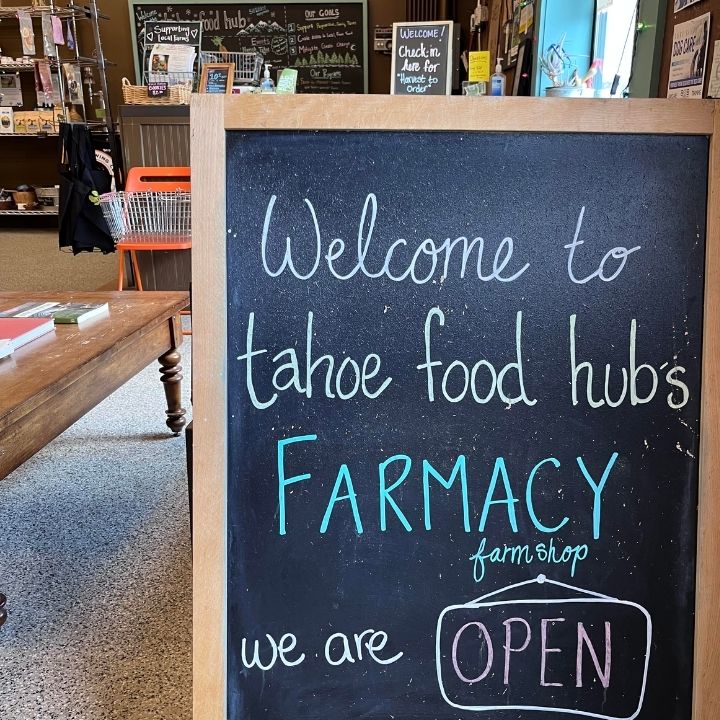
Inside the Tahoe Food Hub, bringing locally grown food from small farms to schools, families, and the community all under one roof.
A local sourcing network that works
TTUSD’s local sourcing is powered by the Tahoe Food Hub, a local food hub that works with 60 farms on the district’s behalf — handling forward contracting and crop planning so the kitchen team can access California-grown produce in season, often at prices that beat retail. Kat also strategically times commodity sweeps and DoD Fresh orders, balancing other purchases to keep budget room when deals arrive. The variety that comes with local sourcing is a bonus she genuinely values: variety of options keep scratch cooking creative and fun.

Kat Soltanmorad — Director, Chef, Advocate.
The vision behind the kitchen
Kat Soltanmorad has led Food & Nutrition Services at Tahoe-Truckee USD since 2012, building one of California’s most ambitious scratch cooking programs from the ground up. A Cal Poly Pomona grad in Dietetics, Culinary, and Ag Science, and came up through SNAP-Ed and California’s Nutrition Network, where she connected healthy eating to climate and food systems long before it was common in school food. That conviction shapes everything she does at TTUSD — from the three-day birria prep to the $30/hour starting wage to the forward contracts with 60 local farms through the Tahoe Food Hub.
What TTUSD has today didn’t happen overnight — it’s the result of more than a decade of patient, deliberate work: listening before changing, building on what existed, and raising the bar one kitchen, one position, one meal at a time. Every district has to start somewhere, and the most important ingredient isn’t equipment or budget — it’s the willingness to begin.
If you would like resources or procurement support for your own scratch cooking and local sourcing journey, please reach out to Michelle Duong at mduong@caff.org or Claire Tauber claire@caff.org to get started.
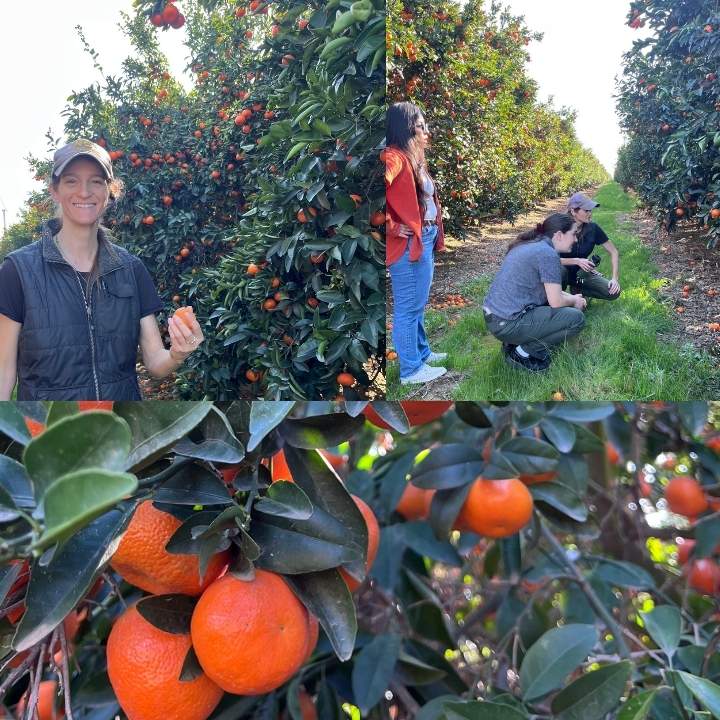
Sarah Weil showcasing her prized Tango mandarins to the CAFF Farm to Market team.
Farmer Update: When Schools Show Up, It Changes Everything
You may remember our previous spotlight on Twin Tree Farms, a vertically integrated family mandarin operation in California’s Central Valley. Sarah Weil grows, harvests, and packs fruit right on the farm — no middlemen, no management company. That kind of independence is a point of pride, but it also means every sale counts.
What a committed school order looks like
This past season, Twin Tree had a breakthrough: Madera Unified became a steady school buyer, ordering 2 pallets per week for two consecutive months. That’s not just a nice line on a sales sheet. For a small family farm navigating tight cash flow while keeping their commitments to their employees, consistent school orders became a lifeline. Sarah did the majority of their sales herself this year — and school districts like Madera USD were a big reason they sold out this season.
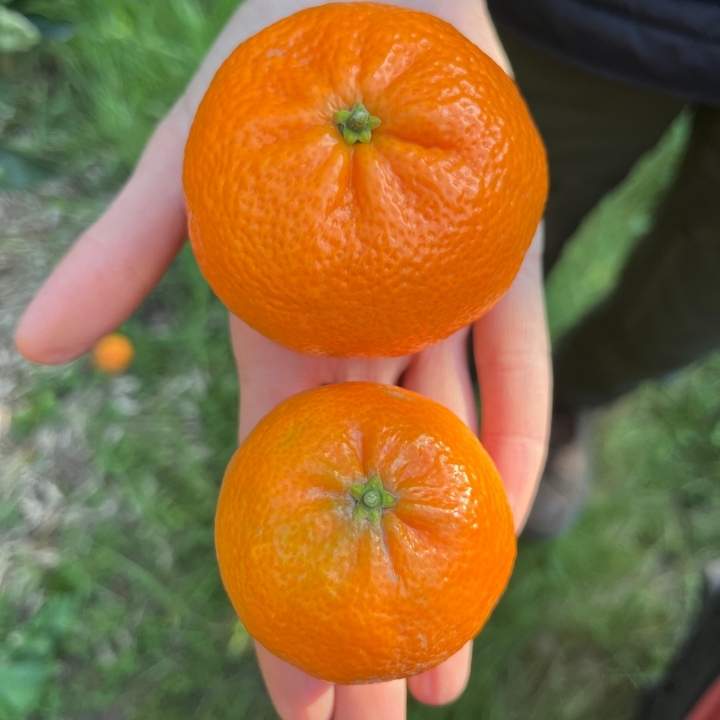
Big or small — the same great taste in a size that schools decide.
Why anchor volume matters
Here’s what that volume unlocks: a single pallet order is enough to make transportation economically feasible — it covers the cost of getting the fruit to your district. But two pallets or more is where the farmer really starts to benefit from economies of scale, freeing up resources to serve smaller buyers too — the districts a few cases. Without that anchor volume, the labor and transportation costs of small orders doesn’t pencil out. School procurement doesn’t just help the farmer. It holds the whole local supply chain together. And when that volume comes through a direct school relationship — not a packinghouse, not a distributor, or marketing companies, all focused on volume over value — the farmer sets their price, and the school negotiates directly with the person growing the food. That’s a level of purchasing power you simply don’t get with a broadline distributor. Both sides build something that actually lasts.
Twin Tree Farms is looking for more school partners
For Twin Tree Farms, school relationships aren’t just a sales channel — they’re a lifeline and a way to operate on their own terms. This coming season, Twin Tree will be partnering with additional family farmers and expanding their citrus offerings. With their own state-of-the-art on-site packinghouse, they can offer partner farmers something the big packinghouses don’t: higher margins, the ability to pack smaller volumes, a focus on freshness and quality over commodity speed, and a direct path into institutional markets that would otherwise be out of reach. It’s the kind of infrastructure that keeps small family farms viable.
If your district sources citrus, a direct relationship with Twin Tree means knowing exactly where your food comes from, working with farmers who are invested in the relationship, and having real negotiating power over price and quality. They deliver statewide and they’re ready to grow for you.
You can reach out directly to Sarah at sarah@twintreefarms.com or reply to Michelle Duong at mduong@caff.org to start planning your citrus needs for the upcoming school year.
Organizational Sign On – Unlock Local Food Purchasing for Schools with the USDA Entitlement Local Food Purchase Option
Deadline – June 5, 2026
An appeal from NFSN and from Kat Soltanmorad (Tahoe Truckee USD):
“Currently, schools are largely restricted to a national “commodity” system. Instead of being able to source fresh, local ingredients, we are often required to choose from a pre-determined list of bulk, processed foods designed to support national industrial supply chains. Even when we have incredible producers right in our own backyard, the current rules make it nearly impossible for us to use our federal food dollars to buy directly from them. As a result, the benefits of local, organic, and regenerative agriculture—the very things that build student health and soil health—remain out of reach for most school cafeterias.
The “Local in Lieu” initiative seeks to change this by allowing districts to receive cash in lieu of these rigid commodity shipments. This shift would empower schools to move away from highly processed, one-size-fits-all options and instead invest those same federal dollars back into our local economy. By shortening the supply chain, we can provide our students with fresher, nutrient-dense whole foods while providing our regional farmers and ranchers with the consistent support they deserve.
If you believe our children deserve the best food our region has to offer, please consider signing onto this letter to encourage Congress to prioritize local flexibility over industrial mandates. Every signature helps us show that our community is ready for a food system that honors both the producer and the student.”
Sign on today and share this widely with your networks.
California Farm to School Summit
October 14-15, 2026
Soil Born Farms, Sacramento, California
California is committed to ensuring every child can access fresh, locally sourced, responsibly grown and raised food at school, at home, and in the community for healthy bodies and minds. The Farm to School Summit celebrates the producers, educators, and school nutrition professionals who bring this movement to life.
The California Department of Food and Agriculture invites you to attend the California Farm to School Summit taking place October 14–15, 2026 in Sacramento! This event is a wonderful opportunity to connect, collaborate, learn, and engage with others advancing Farm to School efforts that include hands on food education as well as local food systems! This event will engage local farmers, educators, partners and programs such as FFA + Ag education!
October 14th – Optional “Funday” Pre-Conference Salons
October 15th – All-Day Summit at Soil Born Farms
Please register using the link below:
www.cafarmtoschoolsummit.com
Farm to Summer Celebration Week
June 16-20, 2026
F2Summer Week is celebrated annually in California. In 2026, F2Summer Celebration week is June 16–20, 2026. This week is dedicated to celebrating local foods by offering taste samples and engaging children in agricultural-based education activities. Some ways to celebrate include incorporating local foods in meals, providing agricultural or nutrition education lessons, watching a virtual farm tour, and inviting community partners, such as farmers, gardeners, or local health staff, to lead activities.
The theme for Summer 2026 is From Seed to Plate: The Story of Our Food.
To learn more about Farm to School (F2S), visit the CDE Farm to School web page.
For assistance with sourcing local product for your celebrations, please reach out to Michelle Duong, mduong@caff.org.
ICYMI New Video: Connecting Schools and Farmers for Organic School Lunches
Watch the latest video from CCOF featuring stories from a school food leader and an organic farmer working to get healthy, organic food into the cafeteria. You’ll hear from Kristin Hilleman, Director II of Food and Nutrition Services for Capistrano Unified School District in Southern California, as she describes the path her district took to sourcing fresh organic food from farmers.
You’ll also hear from Anna Nakamura Knight, a 5th generation CCOF-certified organic farmer whose family has grown oranges in Orange County for over 140 years. Today, she sells oranges to K-12 school districts, and the kids love them.
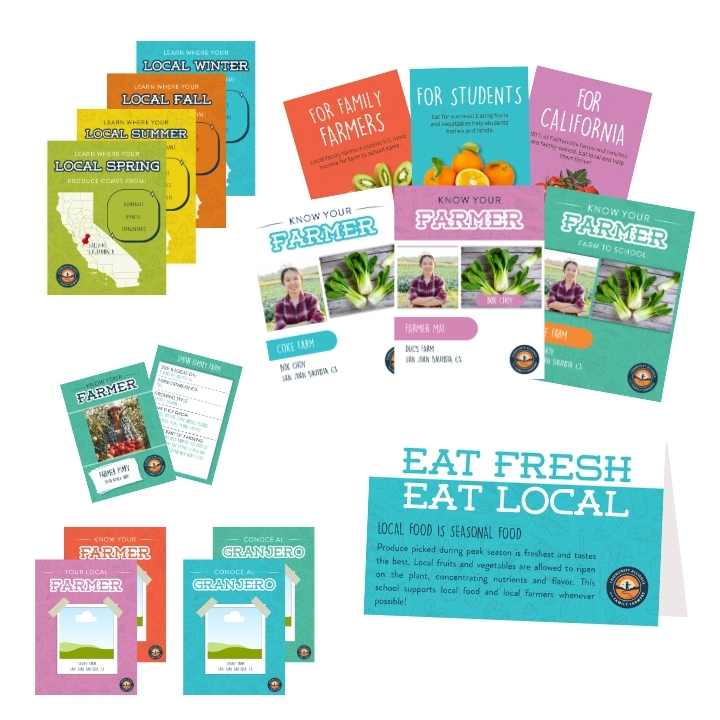
Farm to Cafeteria Signage
Help students connect with their food! CAFF offers free, customizable cafeteria signage designed to promote your farm to school program. Designs are available on Canva so you can easily add your district’s information. Request your free signage.
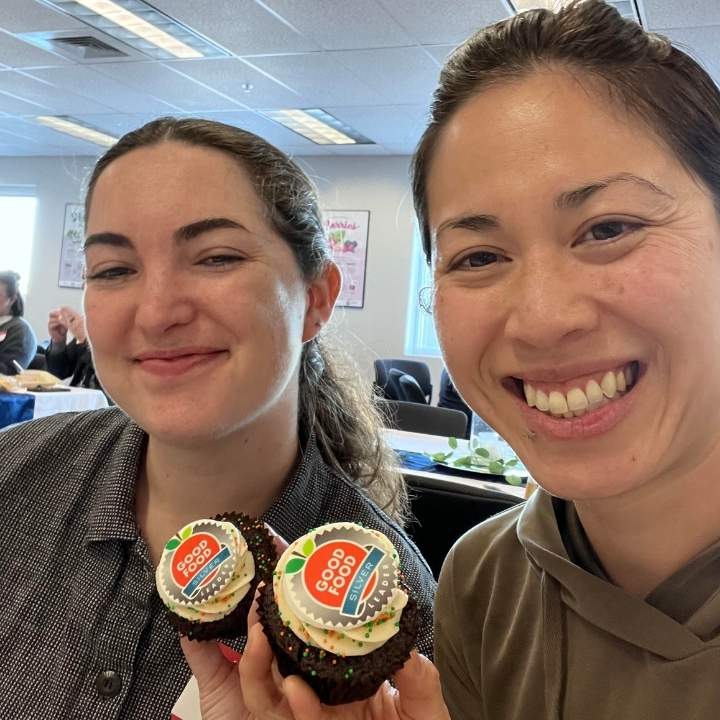
CAFF’s Farm to School specialists, Claire Tauber and Michelle Duong.
Thank you for all you do to bring local food to students’ plates and support California’s family farmers!
Sincerely,
CAFF’s Farm to School Team