Picture a kid in a school cafeteria, tray in hand, biting into a peach that was picked the day before on a family farm just a few miles away. Multiply that moment by millions of trays, thousands of schools, and thirty years, and you start to understand what just happened in Sacramento.
This month, Governor Newsom signed SB 172, permanently enshrining California’s Farm to School Program in state law and locking in ongoing funding for the CDFA Farm to School Incubator Grant Program in the state budget. It’s a milestone for California’s food system. And for Community Alliance with Family Farmers (CAFF), it’s the culmination of work we started several decades ago.
Where It Started
 Long before “farm to school” appeared in any state budget, it was a handful of people trying to solve a simple problem: schools were serving food from far away, while family farms just down the road struggled to find buyers.
In the mid-1990s, CAFF partnered with Occidental College to build on the early-1990s school garden movement and launch some of California’s first efforts to connect local farms directly to school meals. Soon, other groups like Edible Schoolyard, Center for Ecoliteracy and later the Chef Ann Foundation and Eat Real helped plant these seeds too. It was slow and steady work, the kind that doesn’t make headlines but that changed what was possible decades later.
Over the years that followed, CAFF kept that work alive and growing:
- Know Your Farmer field trips took students out of the classroom and onto working farms, often the first time many kids had set foot on one.
- Harvest of the Month tasting kits brought fresh, seasonal California produce into thousands of classrooms, turning snack time into a chance to try something new.
- CAFF served as California’s co-lead for the National Farm to School Network, helping coordinate the state’s efforts long before there was a dedicated state office to do it.
Turning a Movement Into an Institution
 Grassroots energy is essential, but it doesn’t feed millions of kids on its own. It needs to become infrastructure. That’s the part of the story that tends to get left out.
In 2014, CAFF helped pass the legislation that created the CDFA Office of Farm to Fork, authored by then-Speaker John Pérez, giving California’s farm-to-school work a permanent home inside state government for the first time.
We didn’t stop there. In 2016, CAFF pushed hard through the state budget process to move the new Office from year-to-year “soft” funding to permanent “hard” funding, and to secure resources for the California Nutrition Incentive Program (CNIP). That funding gave the Office the staff capacity it needed to eventually take over leadership of the California Farm to School Network from CAFF in 2017.
SB 172 is what that decade of budget advocacy was building toward.
What Permanent Funding Actually Buys
Since 2021, the Incubator Grant Program has invested $86 million across 375 projects, reaching 49% of California’s public school students. Every farmer receiving those grants is a small, mid-size, or socially and economically disadvantaged producer, exactly the kind of operation that gets squeezed out when institutional buyers default to the cheapest, largest supplier. And every dollar invested has generated $2.10 in local economic activity.
One of our favorite proof points: SPORK Food Hub, which grew from serving four school districts to more than 40, now doing $6.5 million in annual sales, an entire regional supply chain that didn’t exist a decade ago, built district by district, relationship by relationship.
This is what “farm to school” actually means in practice: a school district writing a bid that a smaller-scale family farm can realistically win, a food hub aggregating produce from a dozen growers so it can meet a cafeteria’s volume, a farmer who now has steady, predictable demand instead of a gamble every season. Steady institutional buyers are often what keeps a small or mid-sized farm in business at all and every district that chooses to buy local is reinvesting in the farm economy around it.
We’re Still Connecting Fields to Cafeterias
 The passage of SB 172 doesn’t mean the work is finished. It means the foundation is finally permanent. CAFF is still showing up every day, helping school districts write bids that small and mid-sized farms can actually compete for, connecting growers to food hubs and food service directors, and celebrating California-grown produce through our annual California Crunch, now in its 11th year, bringing schools across the state together to crunch into a California-grown apple at the same moment.
We’re deeply grateful to Governor Gavin Newsom, First Partner Jennifer Siebel Newsom, Secretary Karen Ross, and the legislators who fought to make this program permanent. This law exists because a lot of people— both inside and outside of government—refused to let a good idea stay small.
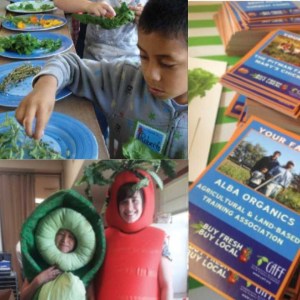
That includes the small farms who kept showing up, the school food service directors who took a chance on local vendors, the classroom teachers who let us bring vegetable costumes and taste tests into their rooms, and the thousands of California kids who tried a fresh-picked strawberry for the first time and asked for seconds.
Thirty years ago, this was a seed a handful of people planted because they believed kids deserved better food and farmers deserved a fair shot. Today, it’s permanent state law. We look forward to helping it grow.
###
Learn more about CAFF’s Farm to Cafeteria program at www.caff.org/farm-to-cafeteria