How is Marysville Joint Unified School District feeding families AND supporting local farmers this summer? Find out in this month’s newsletter — plus meet Veronica Aguilar of Los Prismas Organic Farms, with certified organic strawberries ready for your cafeteria.
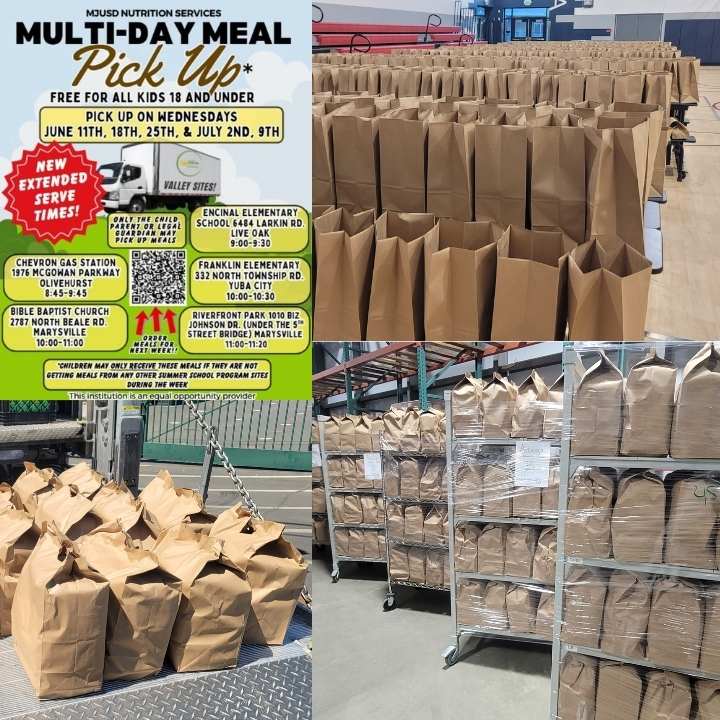
A peek inside MJUSD’s non-congregate summer meals program
Non-Congregate Summer Meals: Seems Too Good to Be True
What if your district could provide a week’s worth of free, nutritious meals directly to families in your most remote rural pockets — reducing daily trips, stretching your labor budget, and even incorporating fresh local produce along the way?
For Marysville Joint Unified School District (MJUSD), that’s exactly what the USDA’s Rural Non-Congregate Summer Meal Service Option has delivered. This relatively new program allows sponsors in rural areas to distribute multi-day meal bundles for pickup — no daily congregate site required. MJUSD’s mission centers on improving food access, and this program was a natural fit. Their first 4 pickup sites were placed deliberately in the corners of their district with the toughest food access challenges, where families simply lived too far for parents to realistically bring their kids for daily congregate meals.
MJUSD distributes 7 days’ worth of breakfasts and lunches at a time, including fresh produce bags with items like serpentine cucumbers, rainbow carrots, and rotating local fruit — and families responded enthusiastically. In 2025, the district served approximately 49,000 meals across 9 sites, and is aiming to distribute an estimated 90,000 meals this summer. The efficiency gains are remarkable too: the program requires roughly half the labor of traditional congregate service while reaching three-quarters of the meal count — and the ROI is high enough that the district is reinvesting surplus back into the program for kitchen infrastructure.
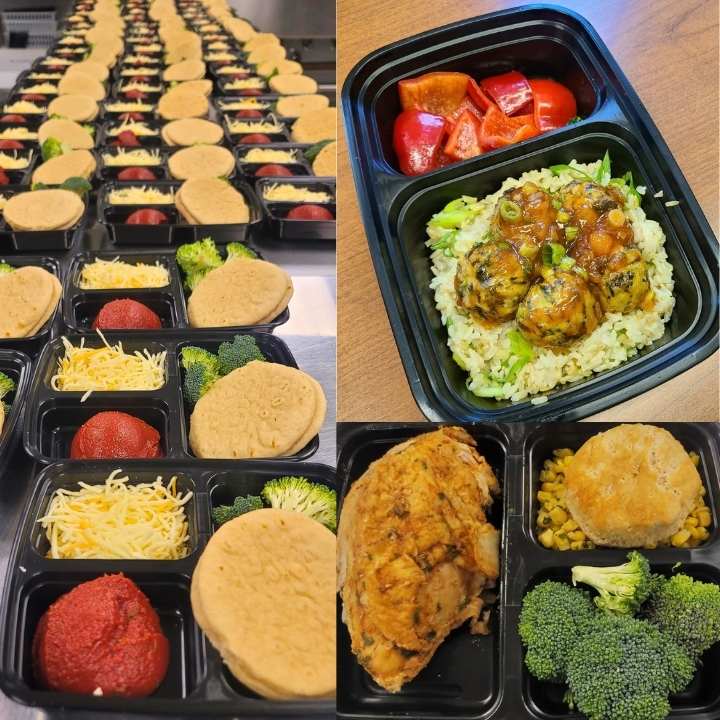
BYO pizza kits, glazed meatballs with pilar, and roasted chicken.
Meeting the Moment
The timing to implement and grow non-congregate summer meals couldn’t be more important. Last year, the federal government cancelled the Local Food Purchase Assistance (LFPA) program — the very programs that helped food banks provide locally grown produce from small family farmers. The program is scheduled to end this summer, meaning that local food hubs and small-scale fruit and vegetable producers who relied on these programs for a meaningful share of their annual revenue are now scrambling. For California’s family farmers — including many who have partnered with food hubs to supply school food programs — this funding cliff is real and immediate. Non-congregate summer meals offer a lifeline on both ends of the food chain: districts running the program need reliable, fresh, locally sourced produce for their weekly meal bags, and local farmers need viable summer markets to replace what LFPA provided.
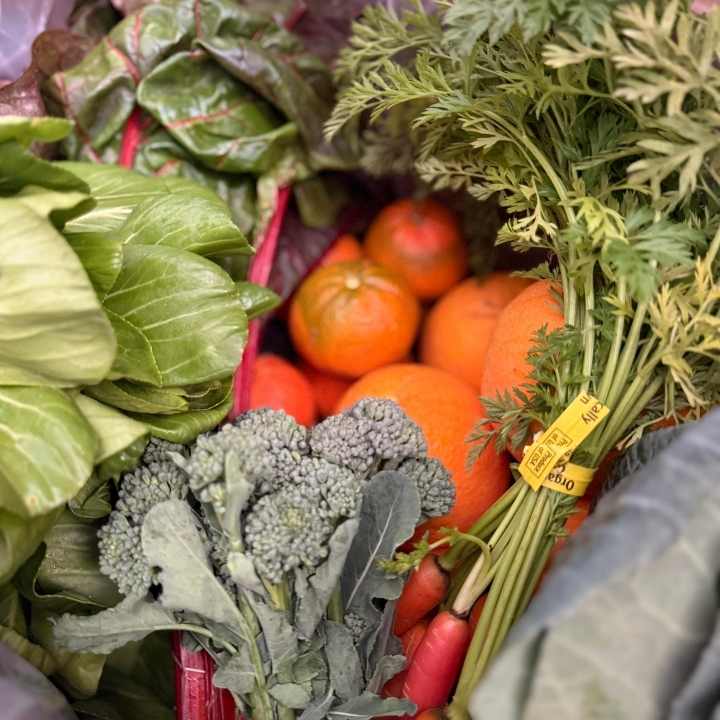
Beautiful, freshly harvested produce from small farmers, available from food hubs across California. Photo credit Keng Vang, Fresno Bipoc Produce.
The Good News
MJUSD has already demonstrated that intentional local procurement fits naturally into the model — sourcing fresh fruit and vegetables that rotate weekly, communicating to families that the produce is local, and building custom bags that make the bounty visible and exciting. Thanks to LFPA, local food hubs across California have the capacity to pack mixed produce bags and boxes, and pivoting to non-congregate summer meals is a seamless option!
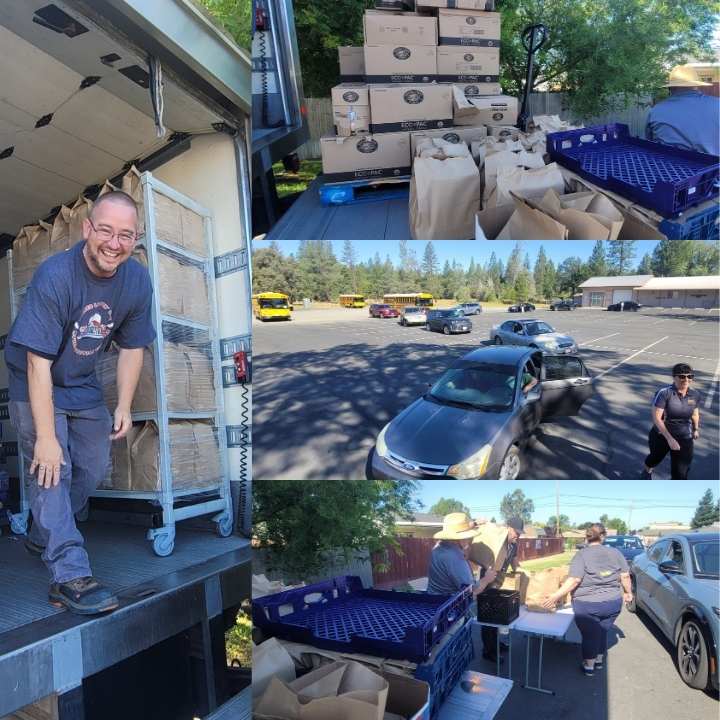
Drive-through, done right: MJUSD nutrition staff distribute weekly meal bags to lines of waiting families
How Your District Can Get Involved
The non-congregate model is more accessible than it sounds, and huge thanks to MJUSD for sharing what they’ve learned. The key eligibility requirements are straightforward: sites must be in areas that qualify as rural under USDA’s definition and meet income thresholds for CACFP area eligibility — and many districts, including those that don’t think of themselves as rural, may find that their outer boundaries qualify.
The deadline to submit your Integrity Plan to CDE is APRIL 1. Learn more about the program here.
Are you already planning a non-congregate summer meals program this summer? We’d love to help connect you with local producers who are ready to partner with you this summer! Reach out to Michelle Duong at mduong@caff.org, or Claire Tauber claire@caff.org — we’re here to help.
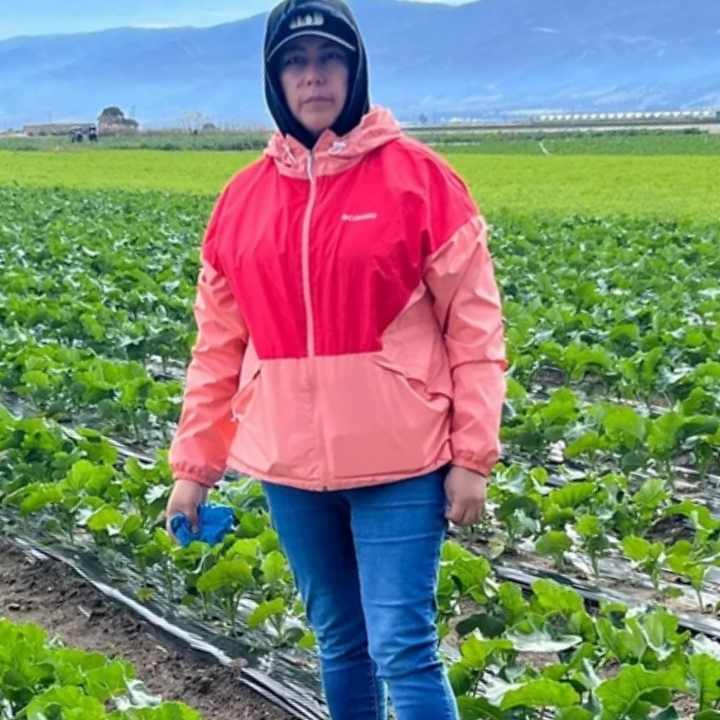
Veronica Aguilar in her element — a farmer who built her dream from the ground up, one harvest at a time.
FARMER SPOTLIGHT: Veronica Aguilar, Los Prismas Organic Farms
Veronica Aguilar fell in love with agriculture at 17 years old and never looked back. After completing training through ALBA (Agriculture and Land-Based Training Association) — a nonprofit that helps Latino farmworkers become independent organic farm owners through land-based education and subsidized access to land and equipment — she entered the program with an open mind and a clear goal: learn to grow strawberries and build a business entirely on her own terms.
Her farm carries a piece of home with her. Los Prismas Organic Farms takes its name from the striking volcanic rock formations and cascading waterfalls of Hidalgo, Mexico — a reminder of where she comes from that she brings with her into every acre she tends here in California.
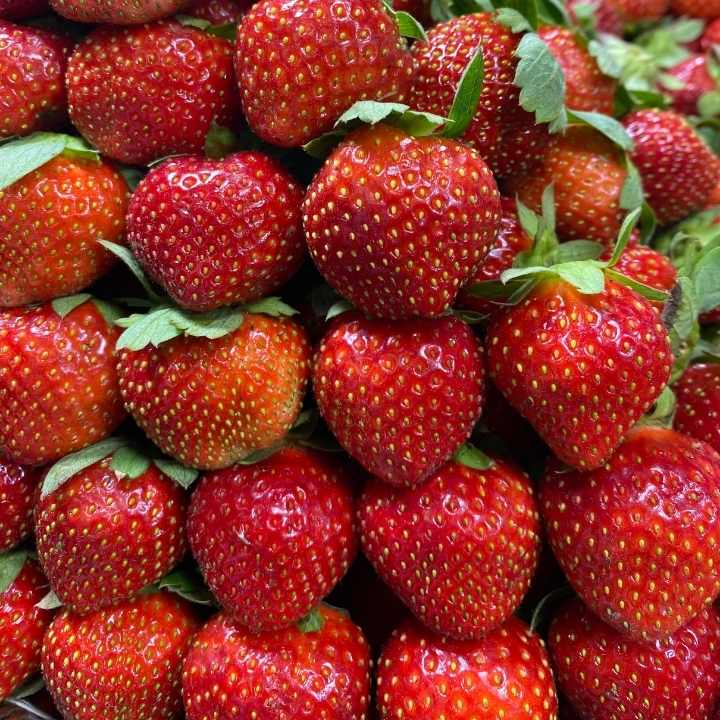
Sun-ripened and freshly harvested, Los Prismas Organic Farms strawberries are as vibrant and full of life as the woman who grows them.
🍓 Ready to Source Local Strawberries This Spring?
The work speaks for itself. Veronica farms strawberries on 6 certified organic acres, ready to meet the needs of your district.
The two varieties she grows are:
- Cabrillo — a darker, deeper berry with a rich, complex sweetness
- Monterey — a bright reddish-orange variety, exceptionally sweet and available a bit earlier in the season
Cases come packed with 8 x 1 lb clamshells, priced at $28 per case — a great deal for fresh, certified organic, locally grown strawberries. Veronica delivers to Monterey, Santa Cruz, San Benito, Santa Clara, and San Mateo counties. If your district is in the area, this is an opportunity you won’t want to miss!
If you’re interested, contact Yareli Ortiz Ramirez at yareli@caff.org, 831-682-3822.
Are you ready for bid season?
We are in the thick of bid season, and we’re here to help make it easier than ever. Bid Generator 2.0 is ready to simplify your RFP process! This FREE and easy-to-use online tool now supports General Produce, Local Produce, Local Milk, and Local Meat contracts.
We offer FREE one-on-one assistance with school food professionals who want support through the RFP contract process for SY 2026-2027. If you’re interested, please email Michelle Duong at mduong@caff.org.
No Kid Hungry California 2026 Summer Meal Grant
Grants of $5,000–$15,000 are available for schools and community organizations serving rural communities through non-congregate summer meal programs (SFSP or SSO). Priority goes to high-need communities with 60%+ free and reduced-price meal eligibility. Applications due April 15.
SAVE THE DATE! Creative Solutions Around Processing Fruits and Vegetables
Join CAFF and the Center for Good Food Purchasing for a new webinar series designed to help California institutions and food producers make values-aligned purchasing a reality. The first webinar — Creative Solutions Around Processing Fruits and Vegetables — is coming on May 26, 2026 at 2 pm. Whether you’re already in the CGFP program or just exploring better procurement, this series is for you.
Date and registration link coming soon!
Farm to Cafeteria Signage
Help students connect with their food! CAFF offers free, customizable cafeteria signage designed to promote your farm to school program. Designs are available on Canva so you can easily add your district’s information. Request your free signage.
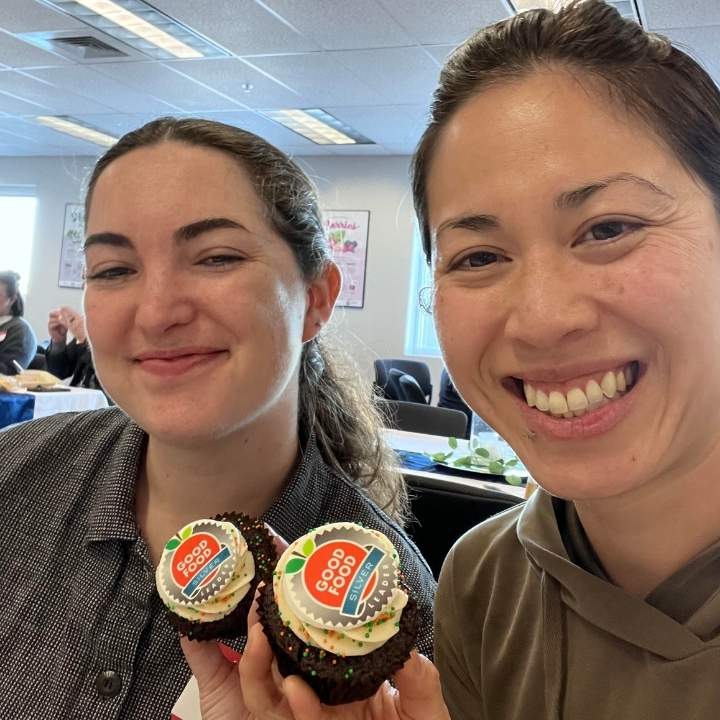
CAFF’s Farm to School specialists, Claire Tauber and Michelle Duong.
Thank you for all you do to bring local food to students’ plates and support California’s family farmers!
Sincerely,
CAFF’s Farm to School Team