
How the California Farmer Relief Fund keeps family farms standing after wildfire, drought, and storm.
When a wildfire rolls through a valley, or a week of record frost wipes out a stone fruit crop, or years of drought force a farmer to choose between watering their fields and paying their mortgage, who do they call?
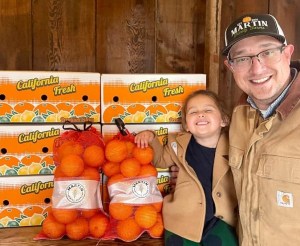
Rarely FEMA. Or a bank. Often, the answer is: no one. Because small-scale farmers, the people growing the food at your local farmers market, frequently fall through the cracks of disaster relief programs built for bigger operations, or for different kinds of losses entirely.
That gap is exactly what the California Farmer Relief Fund exists to fill.
Since 2016, CAFF has provided rapid financial relief to farmers and land stewards hit by the full range of California disasters: wildfires, the COVID-19 pandemic, catastrophic storms, and a relentless, years-long drought. In that time, the fund has distributed over $8.5 million in direct grants to nearly 900 producers across the state.
In 2025 alone, 220 farmers received a combined $3.4 million. Of those grant recipients:
- 63.5% identify as BIPOC
- 60% are first-generation immigrants
- 46% are women
- 8% are veterans
These numbers tell a story that goes beyond agriculture. The farmers receiving this relief are disproportionately people who face compounding barriers: to capital, to institutional support, to the kind of safety net that larger operations take for granted. A single bad season can end a family farm. A single grant, deployed quickly at the right moment, can keep one going for another generation.
What does disaster actually look like for a California farmer?

In 2025, the most common cause of loss was drought, cited by nearly 60% of grant recipients. But the threats are stacking up in ways that mirror the pace of climate change itself: extreme heat, storm and flood damage, killing frost, high winds, wildfire and smoke, even pest quarantine events that lock farmers out of their own markets. These aren’t one-time crises anymore. They’re the new operating conditions for farming in California.
The California Farmer Relief Fund is designed for exactly this reality: fast-moving, multi-hazard, falling hardest on the farmers least equipped to absorb the hit.
Why this matters to you
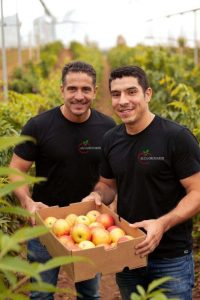
If you’ve ever bought produce from a farmers market vendor, if your kids’ school cafeteria benefits from a farm-to-school program, or if you simply appreciate that California remains a place where small farms who genuinely care for their land and their communities still exist, this fund is part of what makes that possible.
The farmers who receive these grants aren’t abstract beneficiaries. They’re the people behind the table at your Saturday market. They’re the ones who know their soil by name. They’re your neighbors, your community members, your food supply.
CAFF built the California Farmer Relief Fund because we believe that when disaster strikes, the response for our farm community should be fast, human-scale fast and fair, not slow, bureaucratic and exclusionary. We’ve been doing this work for nearly a decade, and we’re not stopping now.
As state funding for the CUSP program — which supports the bulk of this work — runs out in 2026, CAFF is actively advocating for continued investment through alternative channels. If you believe family farmers deserve a safety net, we invite you to stand with us.