Hosted by the Community Alliance with Family Farmers (CAFF) in partnership with Sonoma Resource Conservation District (SRCD), Goldridge RCD, University of California Cooperative Extension, and the Sonoma County Groundwater Sustainability Agency (GSA), the event focused on getting small-scale farmers information on Sonoma County’s groundwater and sustainability plan while also zooming in on practical on-farm water efficiency management practices farmers could employ. It was a great mix of all things water, a topic that only increases in significance for California farmers every season.

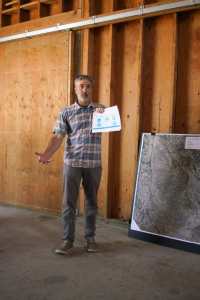
The event took place at Laura’s Apples, an orchard in Sebastopol that has been navigating different irrigation hurdles and is using sensors to aid in her water management needs. To start off the workshop, participants were given a presentation on Sonoma County groundwater by GSA Administrator Andy Rodgers and GSA Plan Manager Marcus Trotta. They covered SGMA, groundwater use and conditions across the county, and the Sonoma County Groundwater Sustainability Plan. The GSA was awarded grant funding to administer various sustainability focused and educational programs, like the “Level Up” well level monitoring program, “Flow Smart” flow meter program, and newer Water Use Efficiency (WUE) program. All these programs are free and aim to help users understand their well levels and use, identify leaks and contribute helpful data to understand overall groundwater sustainability.
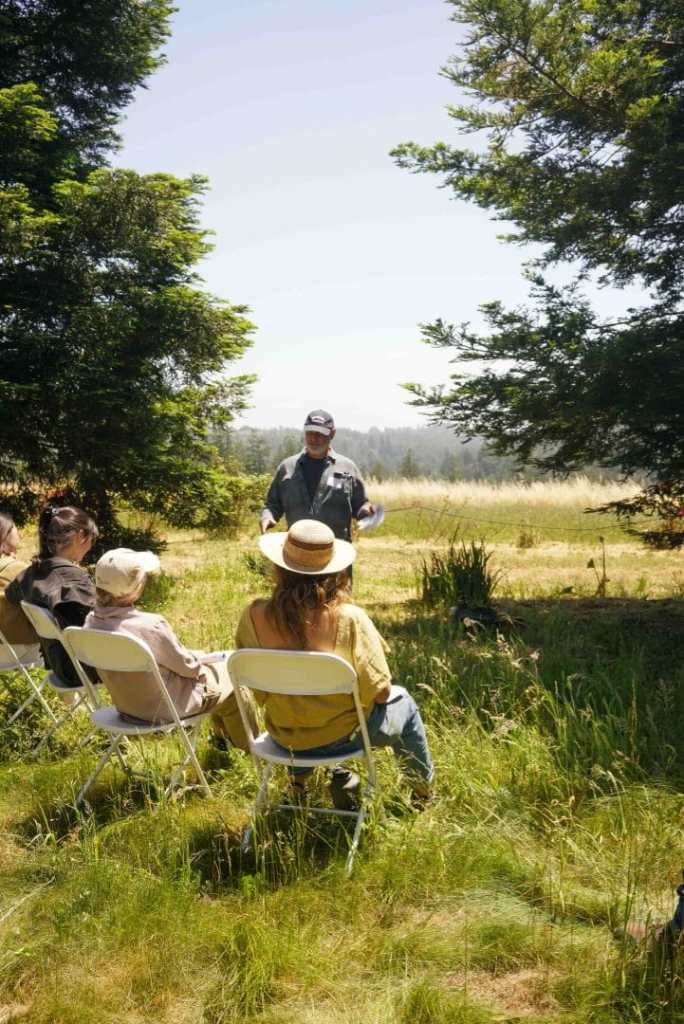

“It was great hosting a series of engaged and informative discussions with farmers on opportunities to build soil health and hold more water in the ground by using compost, cover cops, reduced tillage, and other methods to build soil organic matter,” says Keith Abeles of Sonoma RCD, who works one on one with farmers on these foundational topics to overall water efficiency and soil health.
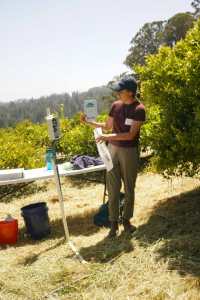
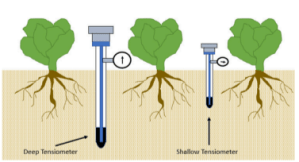
Participants took a brief break to enjoy fresh lemonade from Farmer Laura’s lemons before diving into the DIY activity for the day: make your own tensiometer. A tensiometer is a sensor that measures soil water tension as a proxy for soil moisture. It measures how tightly the water is held in the soil, reflecting the amount of force a plant must exert to extract that water for use. As soil dries, the soil water tension increases, and plants must use more force to extract it. Tensiometers are easy, accessible tools for agricultural water management, helping farmers to irrigate at optimal times, reduce overwatering, and reduce plant stress. The DIY sensor showcased to farmers a low-cost, easy tool they could make themselves and use right now.
“This workshop was a great opportunity to showcase a range of accessible tools for measuring soil moisture, from DIY tensiometers made with hardware store materials to cloud-based monitoring with instant data visualization. Each option has pros and cons in cost, data retrieval, and maintenance. My goal was to present these tools so farmers can decide what fits best for their operation’s water management needs” says Helaine. Ellie adds, “in the same vein, measuring stem water potential with a pressure chamber tells you how “thirsty” your trees or vines are. This can be really helpful when you are trying to make irrigation decisions and wondering how water-stressed your crops are. This is another great science-based decision support tool that can help you strategically fine-tune your irrigation approach. It complements soil moisture monitoring tools to give you a full picture.”
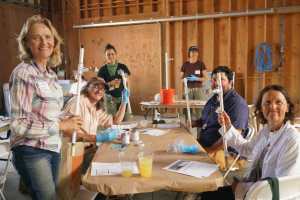
A sold out workshop and positive reception from farmer participants. Most farmed annual vegetable crops and/or orchard crops with interest and questions on appropriate and affordable water infrastructure and practices to retain soil moisture. This showed a thirst for these topics and a desire from our small farmers that they want more technical, accessible help navigating water management.
Reyna adds, “Our small farmers face many different hurdles in facing declining groundwater levels in Sonoma County. Many depend on shallow irrigation wells and generally lack access to means to dig deeper wells or truck in water in times of drought. Compounded by the fact a large portion don’t own their land makes investment in better water infrastructure challenging. But nonetheless many small Sonoma County farmers are committed to conservation practices and show a strong desire to keep improving water management.”
CAFF began partnering with the GSA in Summer of 2024 alongside other local partners as another outreach arm to network with the small and underrepresented farming community on GSA programs, resources and general help navigating. The GSA is working diligently to reach out to every type of user out there to get to know more about groundwater. Find your basin, free program information, and sign up for a helpful newsletter and more at www.sonomacountygroundwater.org.