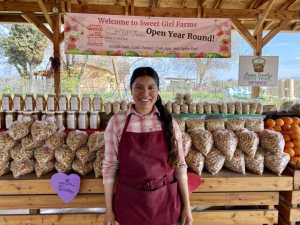
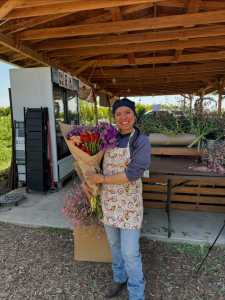
 If you’ve ever driven through Reedley, chances are you’ve seen the vibrant blooms and colorful produce stand that belongs to Sweet Girl Farms. Behind it all is Liset Garcia, a farmer who blends her cultural roots, creativity, and passion for community into everything she grows.
Liset didn’t originally set out to become a farmer. In fact, she earned her master’s degree in public health and thought she’d be working in that field. But in 2019, when her parents’ idea to rent out a small farm stand fell through, she stepped in. What began as a side hustle quickly became something much bigger—especially during the pandemic, when neighbors turned to her farm for fresh, organic produce.
Over time, Liset realized that flowers had a special place on the farm—not only were they beautiful, but they were also a viable crop that brought joy and connection. With the help of her dad, who became just as excited about flowers as she was, Sweet Girl Farms became one of only about twenty farm stands in the region to stay open year-round.
“I wanted to leave a legacy and represent myself,” she says about the farm’s name. “I am the sweet girl.” And that legacy is growing each season.
 When asked what she’s most proud of, Liset doesn’t hesitate: flowers. From the very beginning, flowers were at the heart of Sweet Girl Farms, and they continue to be a source of beauty, creativity, and community joy.
Farming is hard work, but Liset has learned to carve out time for herself, whether it’s going on runs with her dogs and goats or simply bringing flowers inside the house to enjoy. And when it comes to produce, she has a delicious summer ritual: freezing peaches or watermelon and turning them into a refreshing shaved ice treat.