
Small Farms and the Future of AgTech
Needs Assessment on Tools & Technology for Small Farms in the San Joaquin Valley of California
While agricultural technology has advanced rapidly, innovation has largely centered on large-scale, capital-intensive operations. Small farms – despite their outsized contribution to local economies, biodiversity, and food security – are often excluded from these advances. The gap between the tools available and those that are practical, affordable, and relevant for small-scale operations remains wide.
This report aims to fill that gap by identifying the specific technology needs of small-scale farmers in California’s San Joaquin Valley, examining barriers that limit or slow adoption, and offering actionable recommendations for policymakers, funders, technical assistance providers, and technology developers.
Report Objectives
Approach
Findings in this report draw from surveys, interviews, focus groups, and consultations with farmers, technical assistance providers, and subject-matter experts across the San Joaquin Valley.
Key Findings
Small farms in the San Joaquin Valley operate in a complex and resource-constrained environment, where economic pressures, ecological challenges, and regulatory requirements shape daily decisions. While a wide range of agricultural technologies exist globally and domestically, adoption among small farms remains limited – partly because suitable tools are not always available locally and partly because most are designed for large-scale operations rather than small, diversified systems.
- Identify the top technology needs and priorities of small farms in the San Joaquin Valley.
- Examine structural and practical barriers to technology development, access and adoption.
- Highlight opportunities for investment, collaboration, and innovation that strengthen small farm resilience and sustainability.
- Provide recommendations to ensure agricultural technologies are appropriately scaled, accessible, and equitable.
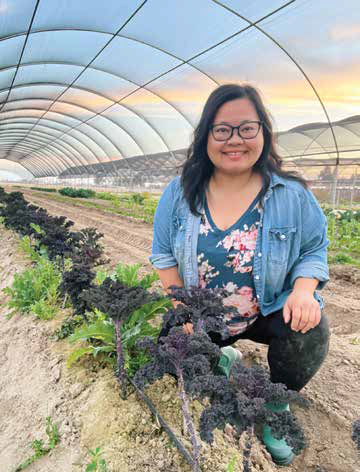
Small Farms and The Future of AgTech
Priority Needs and Opportunities
The success of any agricultural technology depends as much on the systems that support farmers in accessing and using it as on the technology itself. Farmers consistently emphasized the need for accessible financing, trusted and bilingual technical support, reliable infrastructure, and transparent data practices.
Recommendations:
Farmer resilience—the ability to anticipate, adapt, and recover from disruption—is the throughline across all recommendations. Resilience grows not just from new technologies, but from knowledge, networks, and secure foundations: access to water and land, trusted training, affordable financing, and digital inclusion. When small farms have these supports, technology becomes a tool for stability, not risk.
Five Key Areas
Evaluating and Prioritizing Technologies
- Farmers prioritize tools that support efficiency, crop quality, and ecological outcomes, including seeders, harvest carts, and soil sensors.
- Evaluation criteria for technologies include affordability, usability, repairability, and ecological benefit.
- Equipment-sharing programs are particularly valuable for seasonal or specialized tools that are expensive or infrequently used.
Farmer Needs, Barriers, and Enablers
- Diversified farms and specialized farms have distinct technology needs.
- The most persistent barriers to technology adoption on small farms are finding tools that are appropriately scaled, financially viable, and known or accessible to farmers.
- Adoption is a process that depends on awareness, trust, affordability, and ongoing support.
- Peer-to-peer learning, local availability, and trusted technical assistance are among the strongest enablers for adoption.
Sustainable Production and Economic Viability
- Technology should reduce labor and improve efficiency without fully replacing human work.
- Both simple and complex tools enhance productivity, conserve resources, and improve economic viability.
- Smart irrigation and automation can save water, reduce labor, increase yields, and support regulatory compliance.
Data and Technology Sovereignty
- Farmers want transparency, opt-in data use, and local control over their farm data.
- Bilingual data literacy training and farmer-led governance are critical for adoption of digital technologies.
- Proprietary equipment and opaque digital tools limit autonomy and hinder adoption.
Enabling Environments: Policy, Funding, and Partnerships
- Small farms lack dedicated funds for technology validation and culturally relevant training.
- Existing programs (SWEEP, EQIP, SJVAPCD) provide support but are uneven or paused. A training budget is also lacking with most government sponsored grants.
- There is a clear need for technology-focused incentives tailored to the needs and capacities of small farms.
- High potential for partnerships between local, farmer-serving organizations.
- SF-ADAPT is currently in a pilot stage, with working groups being formed to engage farmers directly.
Roadmap and Timeline for Implementation
Implementing these recommendations will mean bringing together many agencies, community
organizations, non-profit organizations, university programs, agricultural technology companies, and
both small and large farms to coordinate their efforts. By prioritizing small farms’ needs around irrigation,
infrastructure investment, land tenure, security, and training there is an opportunity to strengthen the
region’s agricultural economy, food security, and resilience to rapidly changing circumstances.
Read More
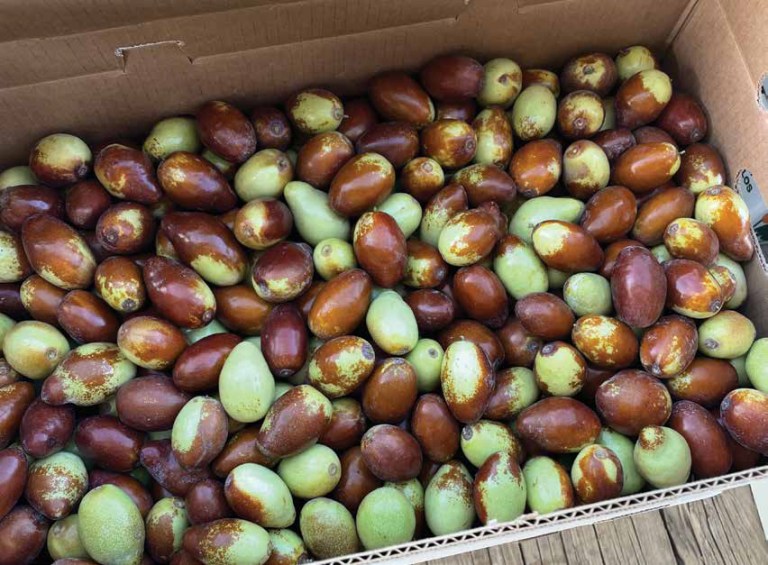

Small farms in the San Joaquin Valley remain a cornerstone of California’s agricultural and community landscape. They produce diverse crops, sustain local food security, and embody the ingenuity and adaptability that have long defined the state’s agricultural identity. Increasingly, these farms are exploring and adopting new tools—both digital and mechanical—to improve sustainability, manage water and labor constraints, and build long-term resilience. Yet their central challenge is not access to innovation alone, but maintaining economic viability amid rising climate, market, and policy pressures.
Acknowledgements
This report was produced by Rebekka Siemens in collaboration with our Small Farm Tech Hub. Thank you to the UCANR Fresno Small Farms Team for all their contributions, this report wouldn’t have been possible without their invaluable input.

Elizabeth Vaughan
Senior Manager, Small Farm Tech Hub
Sharing tech & business solutions to make purchasing local food more accessible and competitive.
