CAFF’s Farmer Services Program has worked with hundreds of farmers over the years to provide food safety technical assistance. We help farmers navigate complicated state and federal food safety regulations and determine what steps they need to take to get into compliance and reduce food safety risks on their farm.
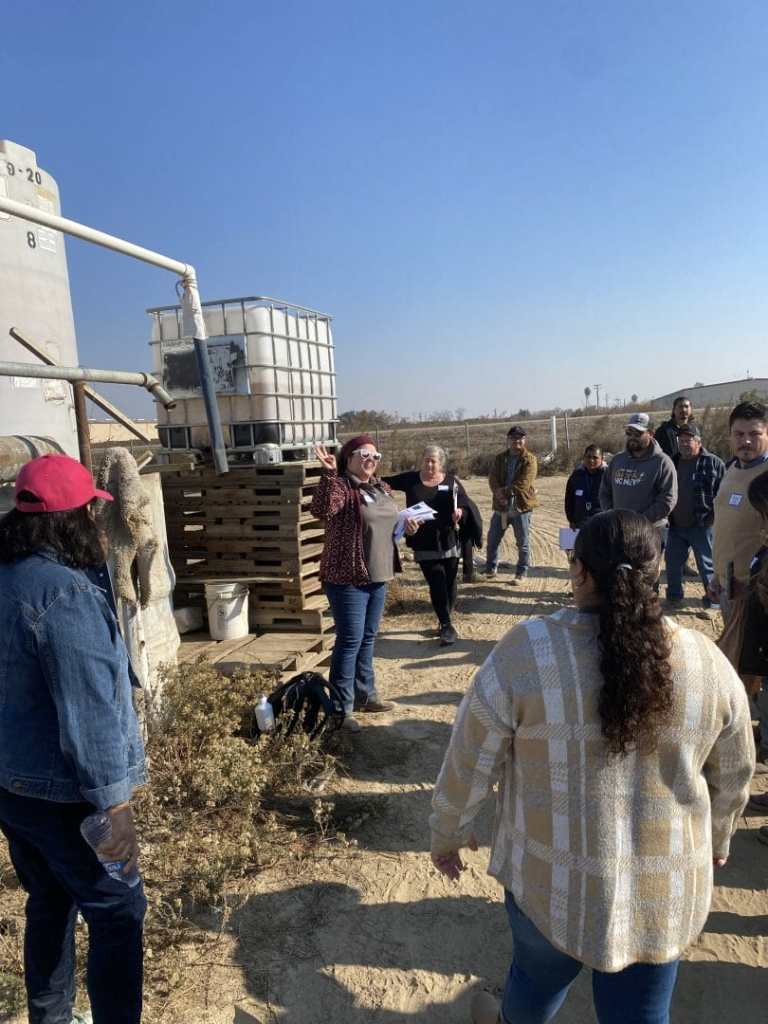
We believe there is no one-size fits all food safety solution for farmers. Every farm is different and each has their own set of food safety risks. We provide a toolbox of food safety resources and services to help farmers in a variety of ways. In addition to our webinars, in-person trainings, factsheets, and food safety plan templates on the website, the foundation of our food safety program is the Partner Farm Program—designed for farmers who are motivated and committed to improving their on-farm food safety practices. In this program, farmers work with one of the Farmer Services Program staff to identify and meet one or more unique food safety goal(s). Together, they work to prepare for a third party food safety audit, get into compliance with the Food Safety Modernization Act (FSMA) Produce Safety Rule (PSR), or implement Good Agricultural Practices (GAPs). The program includes multiple in-person farm visits, access to resources, and guidance to meet the farmer’s food safety goals. Near the end of the collaboration, the Partner Farm hosts a field day and invites farmer friends and neighbors to learn about the food safety improvements implemented during the program.
Since 2019, the Partner Farm Program has supported over 30 farms, resulting in the completion of 30 food safety plans and 6 GAP Audits. Over the last 6 years, we realized that the Partner Farm Program is particularly successful for BIPOC producers. So in 2022, we started partnering with value-aligned food hubs—Coke Farm and Fresno BIPOC Produce—to build relationships and support BIPOC farmers in their network. As a result, over half of the farmers who participated in the Partner Farm Program from 2019-2025 identified as Black, Indigenous, or other People of Color (BIPOC). We, as technical assistance providers, learned unique challenges and opportunities to support these farmers. In an effort to be transparent about our work and share takeaways with partners and farmers, what follows is an account of our work and key takeaways to better support BIPOC farmers with food safety into the future.
Key Findings
BIPOC Farmers Are Already Practicing Food Safety—Just Informally
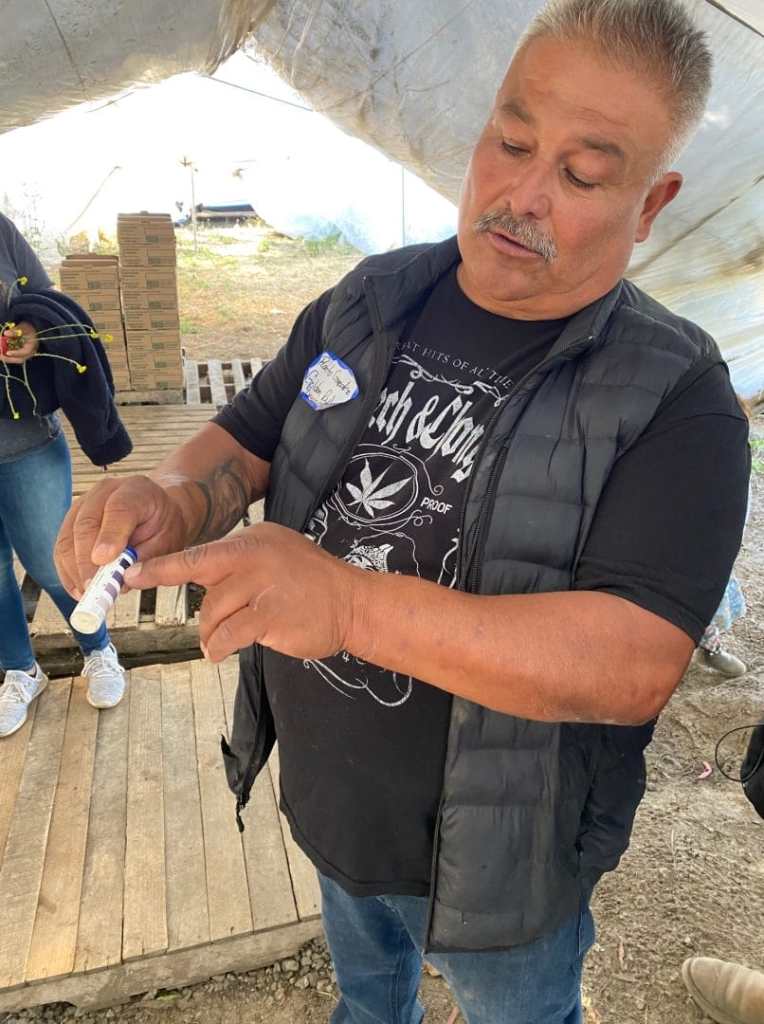
Many BIPOC farmers practice food safety; however, not always in the formal ways required by regulatory agencies and certifiers. These farmers often rely on traditional knowledge—some of it passed down through generations—to ensure they’re growing their food precisely and safely. Farmers that we work with on the Central Coast have always carried out food safety practices such as employee training, hand washing, and cleaning of equipment, but do not document their practices in formalized systems such as records. Barriers to recordkeeping and food safety documentation include low literacy, technology, and time. In most cases, even without a written Food Safety plan, records, and or certifications, we observe that farmers are practicing on farm food safety in alignment with Good Agricultural Practices (GAPs).
Farmers are already operating at full capacity, and certification and recordkeeping are viewed as additional burdens.
For small-scale and under-served farmers, meeting food safety requirements is a heavy burden. Unlike large agricultural operations with dedicated food safety staff, small farms lack the time, staff, and financial resources to navigate complex regulations and maintain extensive records. Tasks such as documenting every step of their farming practices from seed to sale, creating and keeping Standard Operating Procedures (SOPs), and or attending food safety training(s) and workshops take valuable time away from growing healthy crops. This makes it more difficult for these farmers to compete in the market, because many markets require some sort of food safety documentation.
The burdens are not just about recordkeeping, they’re also about access. Federal food safety regulations and certification standards are written in technical language and mostly only available in English, excluding many farmers from accessing and understanding the requirements. For example, the USDA audit process is almost exclusively in English, excluding farmers who do not speak, read, or write in other languages. As a result, food safety laws and certifications that are meant to protect public health can end up marginalizing small-scale farmers or even push them out of some markets.
Some farmers prefer to work with food safety consultants who can handle the work for them, but the high cost of these services is often prohibitive.
From our experience working closely with farmers and surveying a small group of them, many have expressed a strong preference to work with food safety consultants who can take on the bulk of their food safety compliance work. Despite following food safety practices everyday, it can take many months to years of consistent practice for farmers to feel comfortable and confident in their practices. They see working with food safety consultants as a practical option for meeting regulatory and market requirements year-after-year. Consultants who manage all compliance preparation, such as writing food safety plans, organizing records, preparing for and being the spokesperson at audits, are especially sought. However, the high cost of these services remains a major obstacle, particularly for small-scale and resource-limited farms that already operate on thin margins. Many farmers are left with a frustrating dilemma—they understand the importance of food safety and are willing to comply, but financial barriers make it difficult for them to access the kind of assistance that would make compliance most simple for them.
For farmers who do not speak English and want to pursue food safety certifications like the ones offered by USDA, working with a bilingual consultant or technical assistance provider is necessary to complete the USDA’s audit paperwork. Our team worked with a Spanish-speaking farmer on the Central Coast to complete a food safety audit through the USDA GAP Audit program, including helping them submit the request for audit paperwork. The following year, the same farmer requested support from CAFF to complete their audit paperwork—the USDA paperwork is only available in English and the farmer does not speak or write in English. We helped the farmer complete and submit their paperwork, and USDA scheduled their audit with a bilingual auditor. The farmer carried out the rest of the food safety certification process, including the audit, on their own with the bilingual auditor. Had a bilingual auditor not been available, the farmer would have been responsible for covering the cost of an interpreter.
Recommendations
A train-the-farmer technical assistance strategy can have positive, long-term outcomes
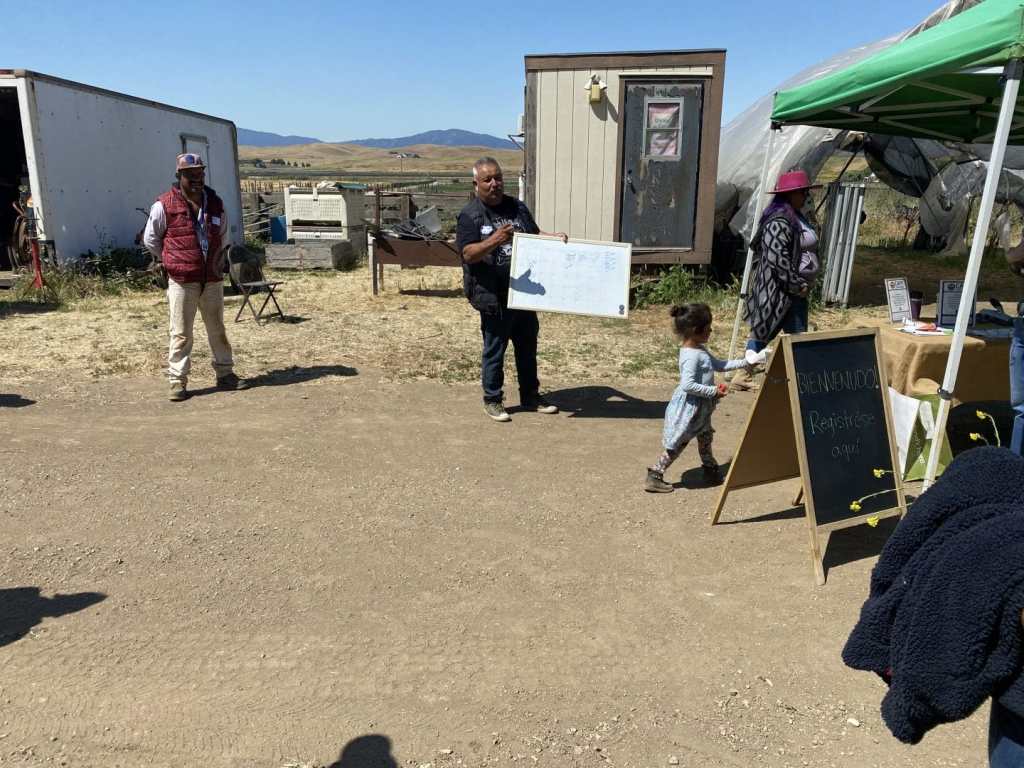
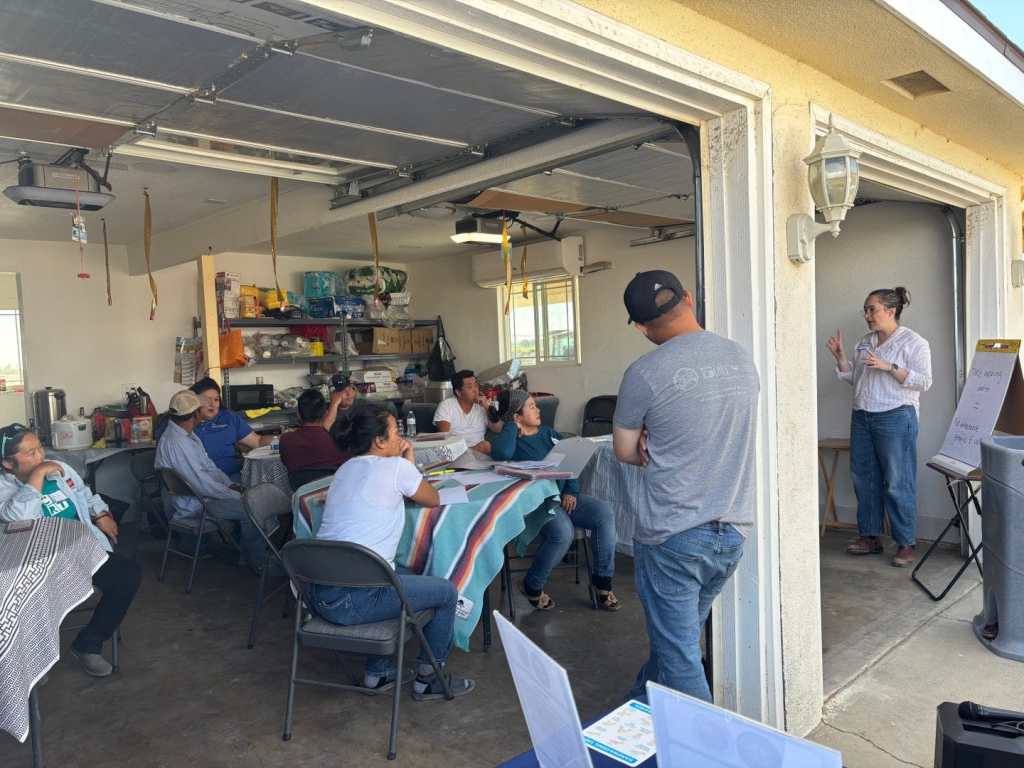
To support food safety compliance for small-scale, under-served farmers, technical assistance should utilize a train-the-farmer approach to increase farmers’ food safety knowledge and confidence. Through multiple in person farm visits, our Partner Farm Program helps farmers set food safety goals, develop a food safety plan and record keeping practice, learn technical terms and paperwork, and complete a mock food safety audit. We assign homework between meetings and help farmers develop bespoke recordkeeping systems that work with their existing systems, such as using a whiteboard and taking photos, and creating a customized spreadsheet or paper template. By the end of our work with a farmer, they lead a food safety audit independently with CAFF staff standing by for support when needed. After 3 years of structuring the Partner Farm Program in this way, we want to explore adapting this program to be cohort-based. We believe a cohort approach can extend our technical assistance capacity to a larger audience, encourage a more reciprocal and less transactional approach to technical assistance, and encourage farmers to learn from each other.
Funding for food safety expenses reduces barriers to adoption and is critical for the continuation of food safety practices
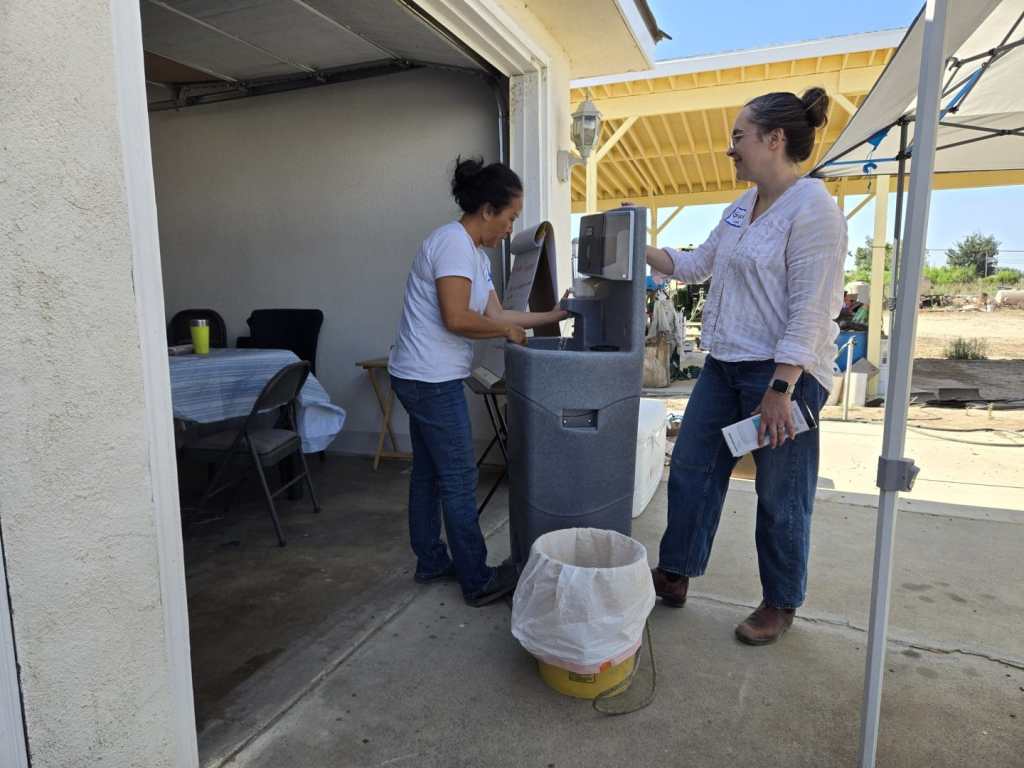
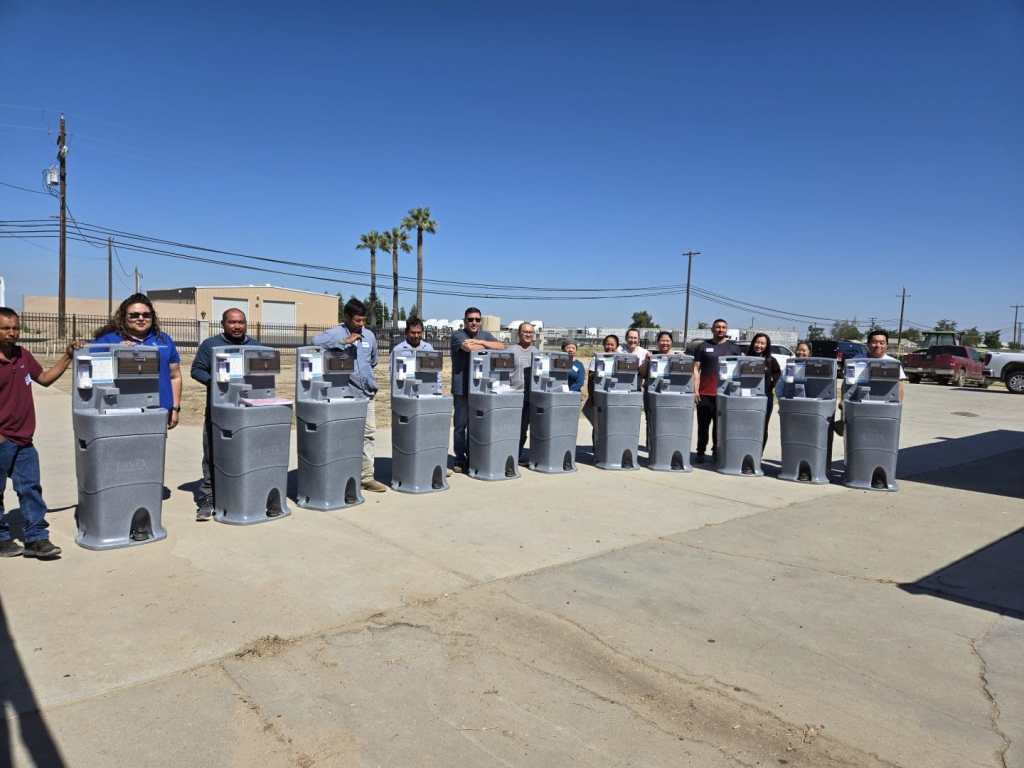
As part of our suite of free food safety services, we offer funding to help offset the cost of food safety adoption on farms. In 2021, we opened a food safety cost share program to reimburse farmers for 3rd party audit and water testing costs. In 2023, we partnered with a lab in the San Joaquin Valley to create a water testing fund that farmers could use to pay for their water tests upfront instead of after. In 2025, we purchased brand-new mobile hand washing stations for a group of farmers going through a GroupG.A.P. audit. As part of our Partner Farm Program, participants receive a stipend that goes toward paying for food safety costs, like sanitizers, water tests, GAP audits, etc. Although the California Department of Food and Agriculture (CDFA) does not offer a food safety cost-share program similar to other states, the United States Department of Agriculture (USDA) provides reimbursement for food safety costs through the Food Safety Certification for Specialty Crops Program. From our experience working with farmers, funding has been critical for habitualizing costly practices, such as water testing, and should be continually available to all farmers through nonprofits or government agencies.
Early integration of food safety practices could be a key to success
Food safety is important for public health and a farm’s profitability. A farm’s food safety readiness can directly impact their sales opportunities and growth potential. Over the past 6 years of serving growers through our targeted food safety outreach and technical assistance program, we have seen an increase in food safety requirements from produce buyers. In our experience, wholesale distributors, larger retail stores, and food hubs—buyers who can purchase large volumes of produce—require a food safety plan at a minimum. In many cases, these buyers require farmers to be 3rd party food safety certified. Farmer’s markets, restaurants, small retail stores, and institutional buyers, like food banks and schools, may require food safety plans from farmers. In 2023, CAFF established food safety requirements for Farms Together, or California’s Local Food Purchasing Agreement Program (LFPA). Farmers applying as vendors to sell directly to food banks through this program are required to submit a food safety plan and follow Good Agricultural Practices (GAPs). Leveling up to meet food safety requirements is often time-sensitive—farmers are looking for a buyer for their bumper crop or when their crops are mature and ready to harvest—and time-intensive. We have heard many stories of farmers losing sales opportunities because they cannot meet a buyer’s food safety requirements in time.
Our Partner Farm Program is often a 6 to 12-month commitment from farmers, and does not provide immediate, expedited service to farmers who need this type of support. While consultants are always an option, we are actively developing strategies that can help address this challenge and are not costly. One idea is to expand access to in person Food Safety 101 trainings that provide guidance for weaving food safety into daily farm operations. The 101 trainings could be a starting point for farmers to learn about food safety requirements that they can build on over a period of time. Another encouraging idea is to provide resources and technical assistance early in a farm’s business. CAFF’s Farm to Market Program is currently building out a resource for beginning farmers with resources they need to be successful. We are collaborating with them to add necessary food safety content. In our experience, without a market demand or regulatory requirement, food safety changes are hard to make on established farms. We believe early integration could be a key to adoption, and are working on trialing these ideas.
Conclusion
Looking ahead, we are committed to deepening partnerships with farmers and value-aligned organizations, advocating for cost-share opportunities, and developing new approaches such as cohort-based training and early integration of food safety into farm businesses. By continuing to learn from farmers and adapting our services, we aim to ensure that food safety becomes an opportunity—not a barrier—for farmers.
This work is supported by the Food Safety Outreach Program, project award no. 2022-70020-37566, from the U.S. Department of Agriculture’s National Institute of Food and Agriculture.