
On June 4th, 2025, CAFF hosted a field day at the Colombini Ranch in Linden, CA. The event was centered around the topic of orchard irrigation, phytophthora management, SGMA, and spider mite management.
The ranch sits along the Calaveras River, and has been owned and managed by the Colombinis since 1990. In 1999, Jay Colombini and his business partner, Ray Latimer, joined the Biologically Integrated Orchard Systems (BIOS) in walnuts project that promoted the use of soil health practices like cover cropping. The Colombinis continue to implement new practices like no-till, and promote them by participating in research projects. Jason Colombini collaborated with CAFF’s Ecological Pest Management (EPM) team in 2023 and 2024 to trial biological control practices to manage spider mites, a persistent pest in many cropping systems.
“I think if you have the patience for them, and you put the extra work in on some of these [practices], you’ll see the results … You might not always see it right away, but you just got to be trusting and keep moving forward with some of these sustainable effects.” – Jason Colombini
In addition to soil health and pest management, the Colombinis understand the importance of proper irrigation management. Like many farms in the region, they rely on surface water to irrigate their orchards and therefore, have to closely monitor their irrigation to mitigate the risk of disease in their trees.
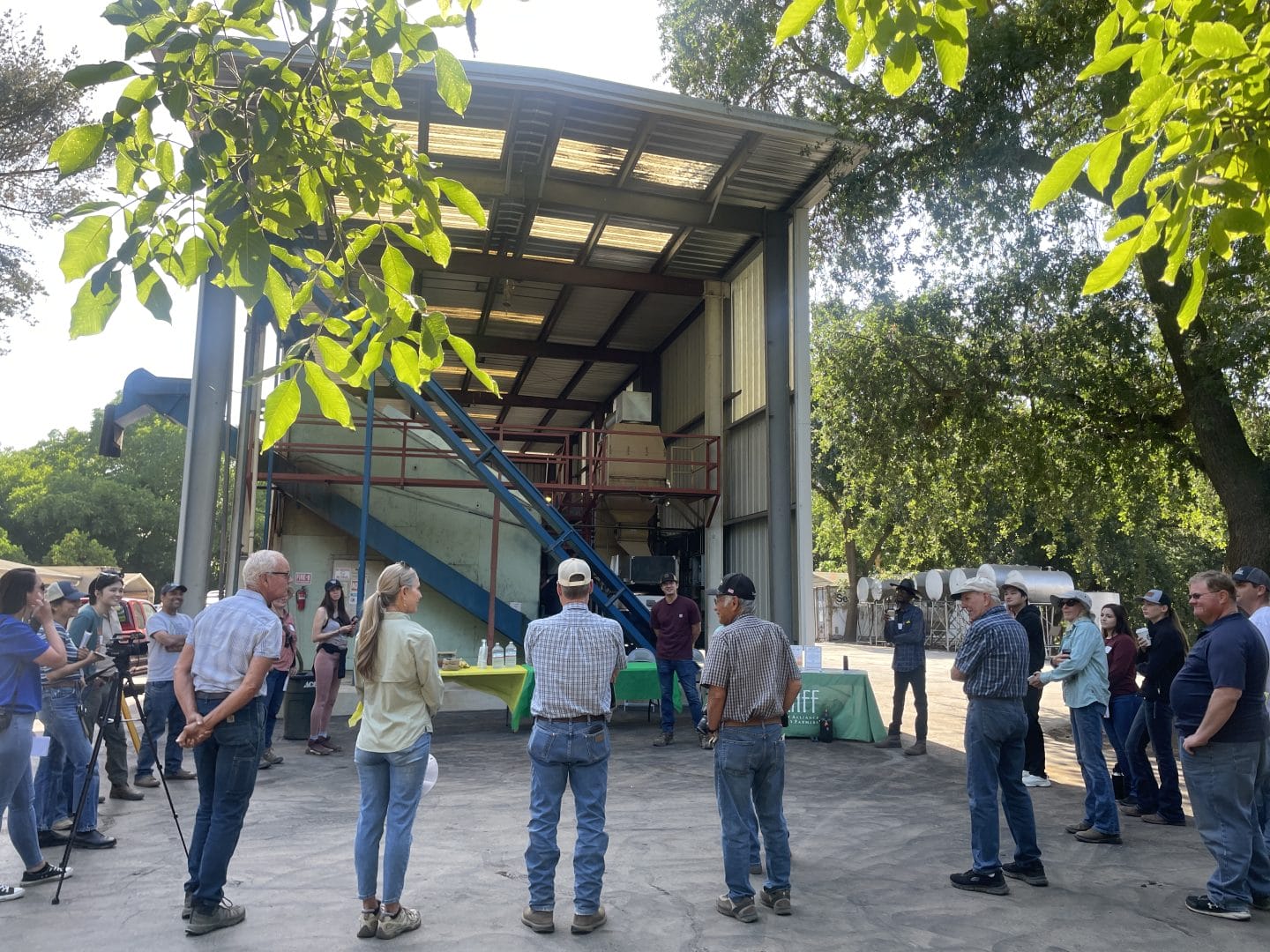
As this was a concern for many growers in the area, Jaime Ott, Orchard Crops Advisor with UCCE, with support from the Stockton East Water District (SEWD) and local orchards, conducted a study to assess the risk of phytophthora in surface water. She presented the results of the study, which showed that phytophthora is present in surface water throughout the growing season, but that irrigating with surface water does not necessarily increase the risk of phytophthora. Of the 40 orchards that she sampled from and tested for phytophthora in the soil, a third of the sites tested positive for phytophthora with no difference between orchards irrigated with surface water or ground water. Based on these findings, Ott recommends that growers manage their irrigation with the assumption that they already have phytophthora in their soil, whether or not they irrigate with surface water. To mitigate phytophthora, avoid saturation at the crown, keep water from directly hitting the tree trunk, irrigate for shorter sets more frequently (ideally no longer than 24 hours) to prevent ponding, and plant on RX1 rootstock. In young orchards, Ott recommends preventing water from soaking the tree sleeves, and moving the drip tape 2-3 ft away from the trunk after the first 4-6 weeks, or as soon as possible.
Listen to Jaime Ott discuss the findings from her research on the MyAgLife podcast or watch here:
In addition to the disease considerations, irrigation management is crucial since the Eastern San Joaquin Subbasin is critically overdrafted. Justin Hopkins, General Manager for SEWD provided a background and update on the Sustainable Groundwater Management Act (SGMA), and how it would impact growers in this subbasin. Then we had Jarin Tasmin Anika, the local SGMA Technical Assistance Coordinator with UC ANR, explain the services she provides to inform and engage small-scale farmers in the San Joaquin Valley and answer any questions they may have about SGMA. For growers across the Valley, UC ANR and CAFF have a team of SGMA contacts in the San Joaquin Valley/Southern CA/Central Coast areas and Sacramento Valley/North Bay areas.
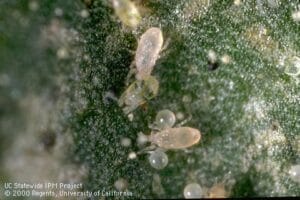
As growers experience hotter and drier seasons, they can have more problems with pests such as spider mites, which thrive under these conditions and target stressed trees. Due to increased concern over spider mite pressure, CAFF conducted a research project to trial biological control practices in walnut orchards and winegrape vineyards across the Sacramento and San Joaquin Valleys. In collaboration with the Colombini’s, CAFF trialed predator attractants such as methyl salicylate, predator food sprays, and predatory mite releases. Moet Takata, CAFF’s EPM Program Manager, provided some preliminary results from the trial conducted in collaboration with the Colombini’s. When implementing these practices, CAFF found that it’s important to consider all factors that can affect spider mite pressure, including hot weather and water-stressed trees, dust along roadways exacerbating outbreaks, and the use of pesticide applications that might be harmful to natural enemies of spider mites.
Read more about the spider mite trial on West Coast Nut.com.
This event highlighted the importance of a whole-systems approach to farming. Just as irrigation can affect so many aspects of the farm, every management decision should consider the holistic impacts on and interactions within the entire agroecosystem. This extends to the collaboration between farmers like the Colombinis and researchers, technical assistance providers, policymakers, and the broader community, which is crucial to the success of sustainable family farms.