New Resource: Organic Farm Supply Directory + Reflections from Our 2026 Organic Agriculture Program Intern
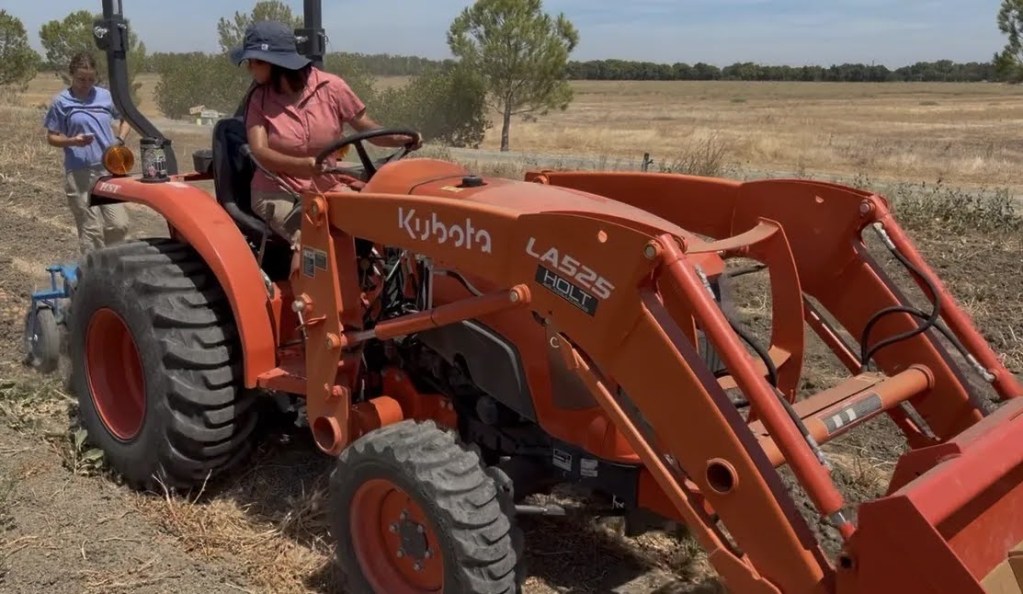
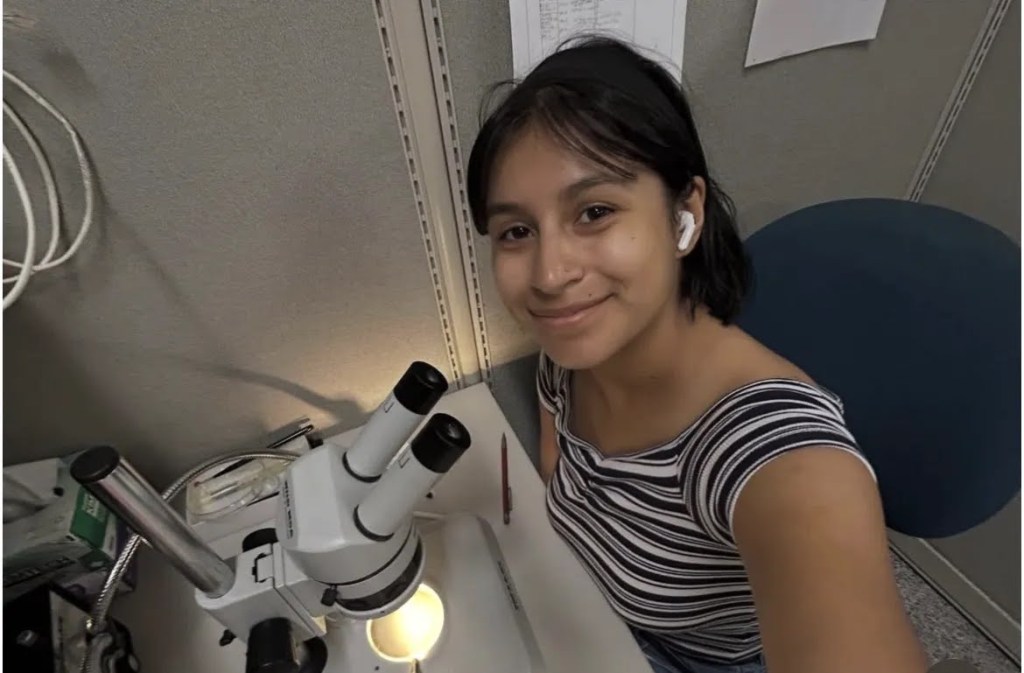
My name is Daniela Castillo, and I served as the 2026 Organic Agriculture Intern at CAFF. I am from Oakland, California, and I moved to the Sacramento region in 2021 to pursue higher education at UC Davis, where I earned a degree in International Relations and International Agricultural Development. My academic journey inspired me to become a technical assistance provider for farmers globally. However, I recognized the importance of having a farming background to truly understand the field and so, I have spent the last three and a half years working on small-scale farms and currently serve as a farm supervisor in West Sacramento at Fiery Ginger Farm. I have also continued to expand my skillset through various opportunities, including tractor operation at the Center for Land Based Learning, working with mites in a lab as part of an IPM project with the Ecological Pest Management team at CAFF, and continuing my education to better understand the biological and physiological aspects of agriculture.
Growing up, my perspective on “organic” food was limited; I viewed it primarily as a luxury item associated with a “healthier” lifestyle. While I partially understood what “organically produced” entailed, I recognized a social stigma for those who could not afford organic foods. Now as a farmer, I’ve broadened my view about what it looks like in practice, as well as the implications of organic practices on the land we grow on. Yet, I remained mindful of the barriers farmers and consumers face when transitioning to organic systems. When I came across this internship, I wanted to learn more about what organic transition truly meant. What part of the conversation was I missing? I wanted to see it more holistically than cynically. This internship provided a holistic perspective on organic transition, showing me that it is about building support systems, increasing resource access, and navigating complex systems to ensure farmers are able to reach their goals.

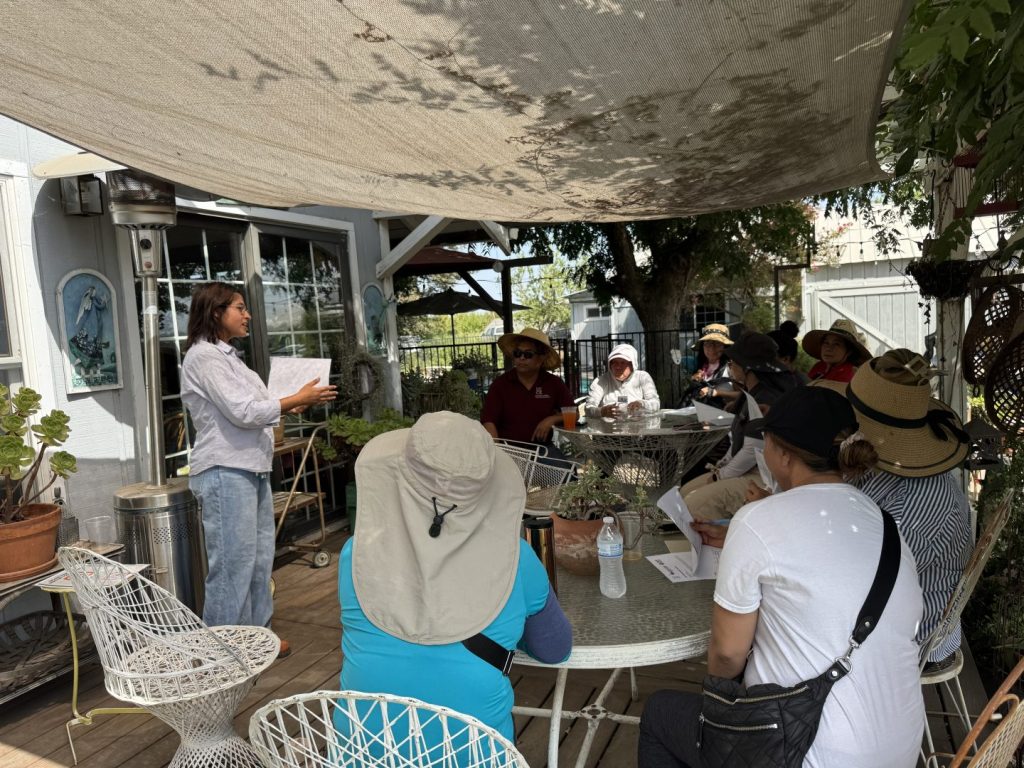
My time at CAFF was filled with opportunities to share spaces with other CAFF workers, farmers, and other working professionals from UCANR, Fully Belly Farm, etc. I was included in a Spring dinner retreat with the CAFF team, and I was able to learn about the work that others were doing for organic transition, ecological pest management, and policy work. It was so fulfilling to see how connected workers were with their projects, and how closely connected they are with farmers! As a farmer myself, it was great to see professionals dedicated to opening up doors for farmers that are in their best interest! I was also part of two farmer meetings in Fresno, and these truly felt like once-in-a-lifetime opportunities to me. I was able to talk one-on-one about issues that farmers were experiencing, what their goals were for their farms, and the pride they take in their farms. Hearing about these experiences and stories helped me while I developed resources for farmers by considering their needs and what could lead to barriers for using said resources.
The first resource I developed was an organic recommendation sheet for a farm in West Sacramento transitioning to organic! All of the resources I worked on were exciting, but I had SO much fun with this particular resource because I was able to learn about compost application rates, draw from my own experiences about soil sampling to create steps on how they can send in samples, offer helpful tools and gadgets for the painful part of farming: WEED MANAGEMENT, and learn about the importance of finding organic inputs that are certified organic/OMRI listed! Developing this resource emphasized my own skills and helped me recognize the knowledge I have about farming. I often forget I’m slowly coming out of my novice-farmer-shell, so this was a milestone in my agricultural career. I finally felt able to assist other farmers and give out recommendations without feeling unqualified.
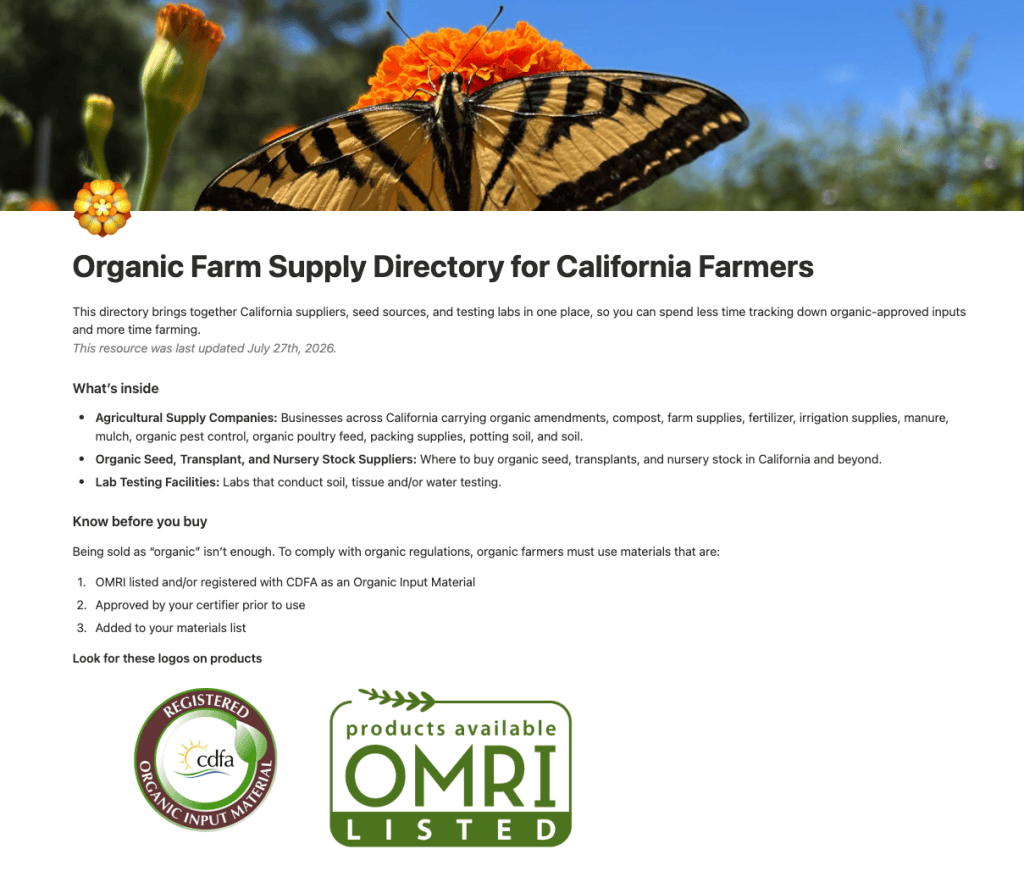
The second resource I developed is my pride and joy. The Organic Farm Supply Directory for California Farmers i is a comprehensive tool that brings together various agricultural supply companies, lab testing facilities, and organic seed suppliers and it is available in both English and Spanish. Developing this resource made me realize how difficult it is to find information for certain suppliers, and I created it with hopes of making it easy for farmers to navigate on their mobile devices and computers. I learned how to communicate within my own network to receive valuable feedback. These suggestions give me different perspectives on how my resources can be effective.

As someone still developing my own knowledge and confidence, I felt that I had to have all the answers and had to build tools that had absolutely no flaws. Especially for the Spanish translation for the directory! I haven’t had many experiences where I’ve had to communicate with Spanish-speaking farmers, so this task really worked my brain muscles and my Spanish skills. But even with these hardships, this process helped me realize that this work requires communication and collaboration (which I had with Grace), listening to farmers about what they’re looking for, and active research! I had to regularly ask myself what questions and challenges might I have if I was utilizing these tools, and if parts of these resources were even relevant to the groups we were supporting.
I am so grateful to have been part of such an amazing program such as this one, and so happy to have been able to work with Grace Jackson. Grace and this internship opened up a space for me to ask questions about what I don’t know, have conversations about the difficulties of farming, understand what farmers, and myself, need, and what work still needs to be done. After this opportunity, I would like to continue my journey as a technical assistant provider, and have signed up for the Technical Assistance Provider (TAP) Certification Program at Chico State! For a lot of my professional and educational career, I was afraid that I wasn’t qualified to pursue my dream career. I am happy that this internship, along with farming, has underscored the knowledge and support I can bring to the table.