Vitis and Ovis Farm Tour and Discussion: Adaptation to Climate Extremes in the Capay Valley

On September 19th, Community Alliance with Family Farmers held a field day at Vitis and Ovis farm in Capay Valley, CA. The event consisted of a tour through the biologically diverse farm and wrapped up with a discussion focused on the regenerative agriculture practices at Vitis and Ovis as well as issues and adaptations that farmer attendees have been dealing with on their own farms. 

Gisèle Herren of Vitis and Ovis Farm alongside their flock of grazing ducks.

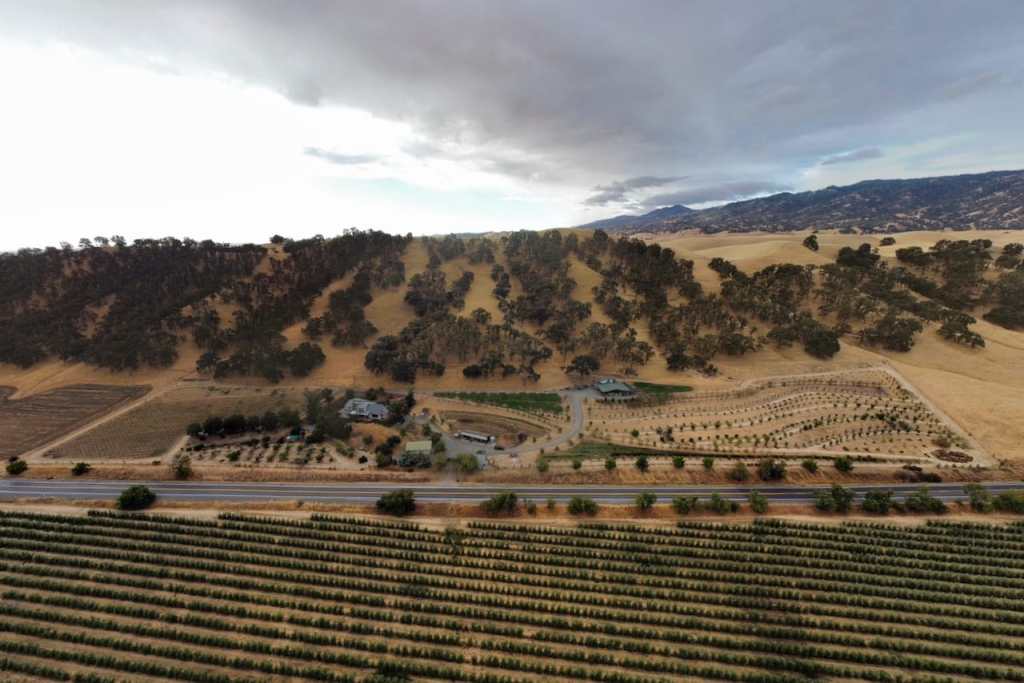
We kicked off the event with introductions from the family. Hans Herren, Barbara Gemmill-Herren and their daughter Gisèle Herren spoke about how they utilize their combined studies and experiences in ecology, biological control, entomology, and nematology to guide the operation of their small farm. When they purchased the farm over 30 years ago it was an unproductive almond orchard and since then they have pulled the almonds out and utilized the sloped landscape to construct swales, establish a vineyard, and plant a wide variety of fruit trees which provide shelter while their flock of ducks grazes.  
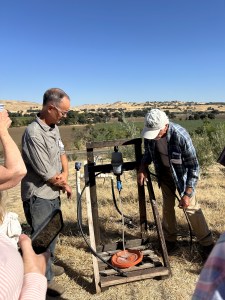
Hans Herren showing attendees an on-farm device as he discussed their experience in making compost tea.

Hans began the tour by pointing out the solar panels on top of the large shed where guests gathered. “We try to go green as much as we can,” he mentioned. He then shifted over to their water pump which had a flow meter installed by the Yolo County Flood Control and Water Conservation District which allows them to collect data and consciously monitor their water use. They also run separate tests which allow them to see the water’s sodium levels. Hans noted that a high irrigation pressure system is required to effectively move the water throughout the 11 acre farm, the length of which is situated along the hillside, with a moderate slope. They’ve also experimented in fertigating with microbial brews and compost tea.

The group then moved up the slope, in between the small orchard and vineyard. They’ve taken a somewhat experimental approach in the orchard to see what grows best, and found that jujubes, apricots, and pomegranates thrived while apples and chestnuts didn’t do well due to the heat of the region and plums were too susceptible to disease. Alongside the small orchard is the vineyard planted in 2000, which was burned by a fire that occurred in 2003. Hans explained that they only replaced the dead grape vines instead of uprooting the entire vineyard, since those with already deep established roots minimize the need for watering. It was then that we were greeted by the flock of ducks grazing in the vineyard, which were making their way to the opposite end of the farm.
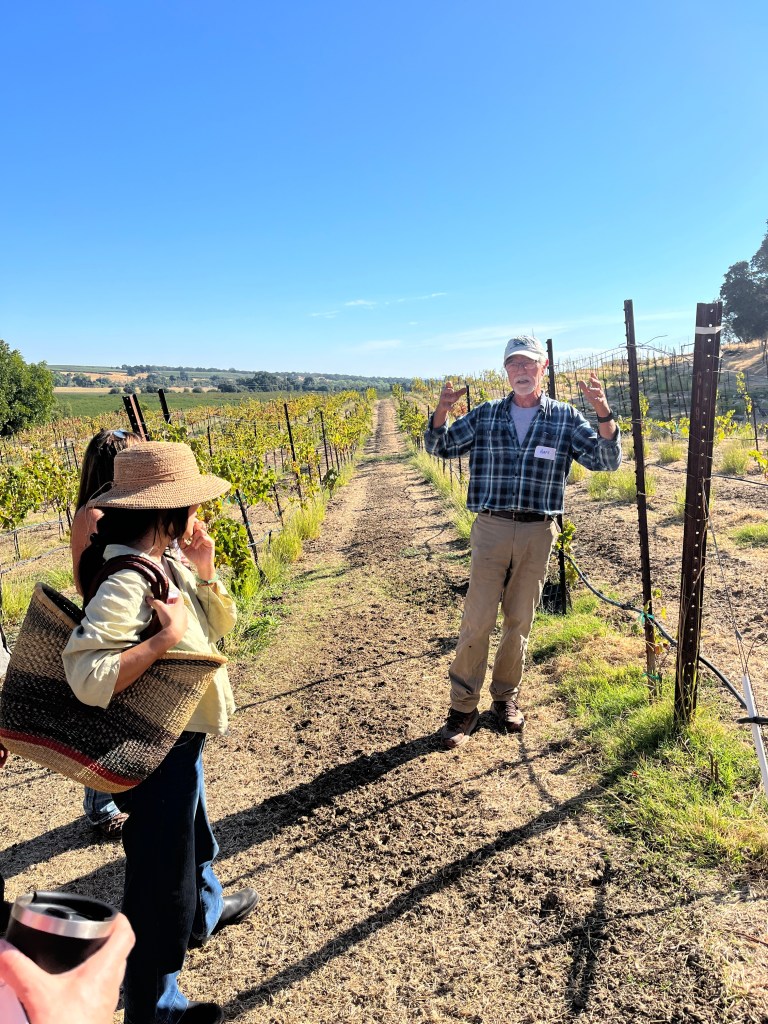
Hans sharing the history of their vineyard with guests.

In order to stack practices and keep the cover crop under control, they attempted sheep grazing, but when it was unsuccessful due to lack of year-round pasture, they tried grazing with a more space-efficient flock of ducks instead. This proved to be very effective while providing pest control and soil health benefits through the addition of manure, adding to the soil fertility. And to adhere to food safety requirements, they keep the ducks out of the orchard and vineyard for a minimum of 90 days before harvest. 

Moving onto the other side of the farm where the larger orchard is located, the slope is filled with a wide range of fruits including jujubes, pomegranate, quince, figs, peaches, citrus, mullberries and native elderberries. The key is to pick adaptable crops and varieties that can tolerate heat and require minimal water. Most of the trees were planted in 2022 with fairly close spacing to benefit from the water retention that the swales provide. An early maturing variety of apricot not only gives them a market edge, it also allows them to get the ducks in the orchard earlier, just after harvest, thereby maximizing pasture. In addition, uncommon varieties of white and pink pomegranates, along with the jujubes which are seldom seen at the farmers markets they sell at, give them a niche. Gisele noted that the duck eggs even helped get them into the sought-after Downtown Sacramento farmers market because no other vendors had them there. And so far the demand has been good. 

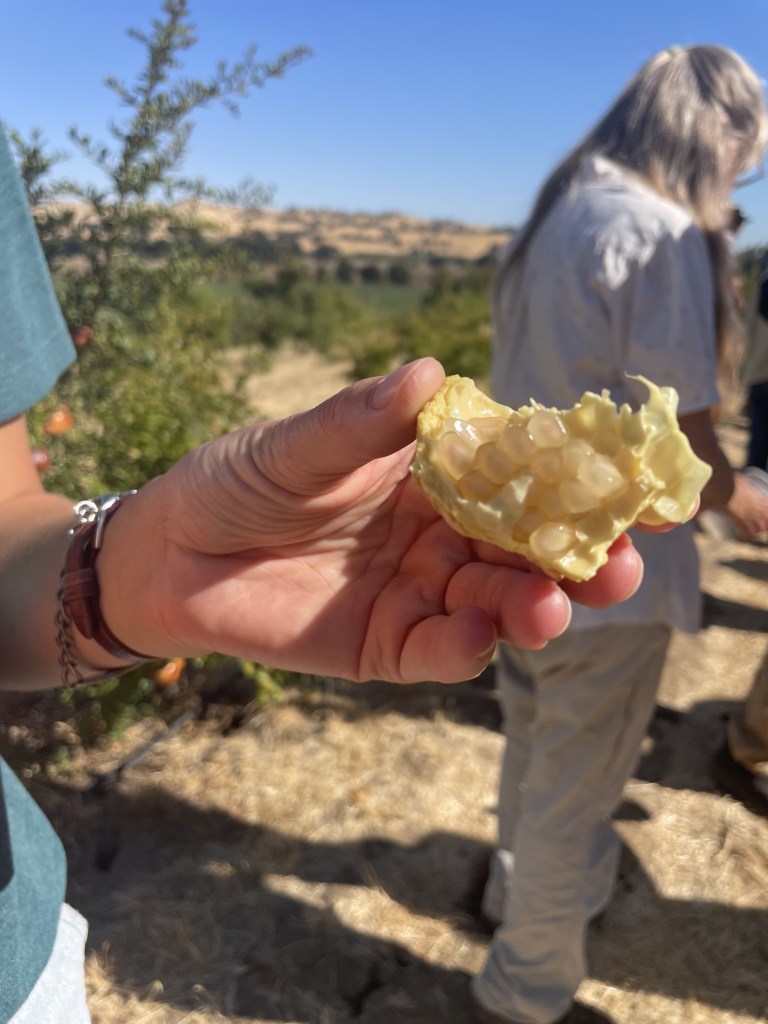
Guests were treated to the farm's white pomegrantes.

“The diversity benefits us because when something isn’t doing well there’s another thing to fall back on”- Gisèle Herren

Attendees were curious about the construction of the swales, to which Barbara explained that their construction was based on topography maps done by Lydia Nielsen, and construction of the earthworks was led by Jonah Love of Barefoot Development. The swales appear similar to a terrace in that they shorten the slope into a series of shorter, more level areas, with an edge up that make ponds for the ducks when it rains. Essentially they were designed to work with the natural slope of the land to ensure that water flows very slowly so no flooding occurs and the water permeates into the soil. Additionally, mulch around the trees has really helped with water retention and weed suppression.

“We treat the soil like a great big gigantic sponge for water retention”-Barbara Gemmill-Herren

Overview of Vitis and Ovis Farm, photo by Colin Richard.

When asked about any cover crops that the ducks like in particular, Gisèle responded with “Anything really, we’d like to start implementing clover and other plants which come back easier since we move the ducks frequently because they eat everything quickly”. And while they are lucky to not deal with ground squirrels much at Vitis and Ovis, other farmers discussed how they rely on their traps since it is the most effective method of control. Some farmers noted they are catching up to 4 squirrels a day. Additionally, gophers, moles and voles have proved to cause issues on their farms as well, particularly damaging root systems of trees and irrigation systems.     

Curiosity about native grass implementation also arose, and Barbara explained that they can be difficult to work with since they often grow elsewhere from where they are planted. However, needle grass and wild rye have done well as cover crops. 

“Native grasses have erosion control benefits due to their deep roots”- Barbara Gemmill-Herren

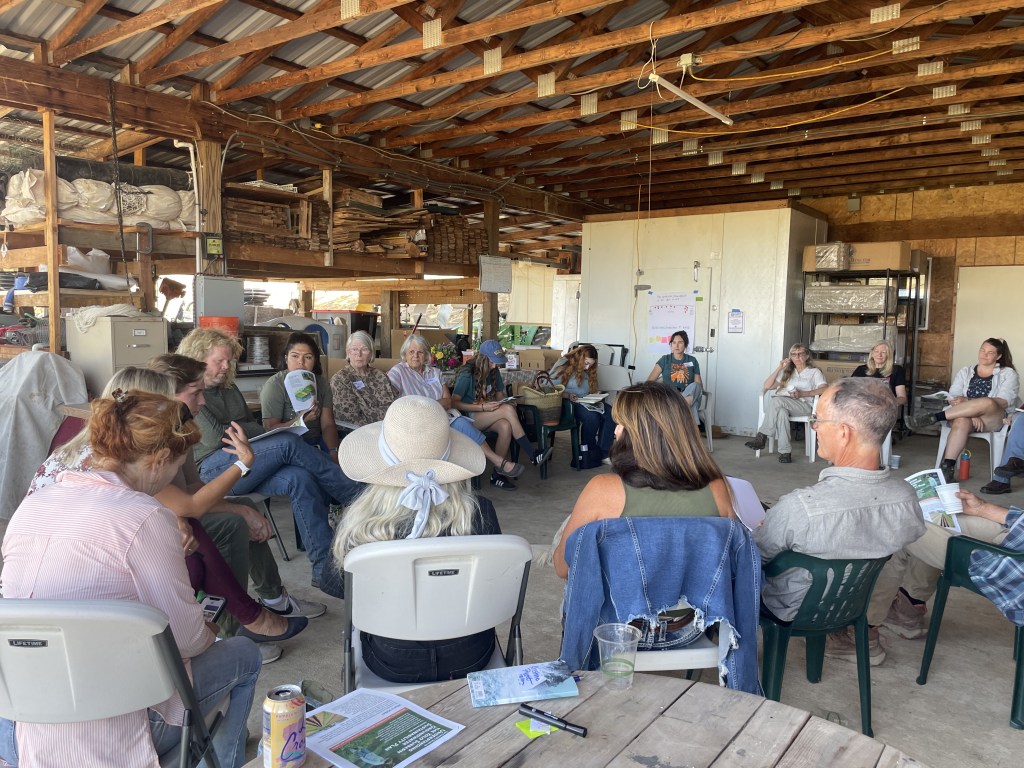
Attendees engaged in discussion after the farm tour.

Farmers shared additional methods that have been beneficial in combating climate extremes on their properties. One shared that they used fencing and cloth around the base of fruit trees to shade the soil which helped them see a comeback in their elderberries. Rotational grazing has been especially helpful to cut down on manual labor by using goats, horses, or sheep to help with fire prevention.   

To wrap up the field day, CAFF’s Groundwater Community Engagement Coordinator for the region, Lan Ngo, facilitated an activity to see how familiar attending farmers were with the Sustainable Groundwater Management Act (SGMA). She provided them information and resources to help them know what SGMA is and what to look out for in the years to come. Kristin Sicke, the executive director with the Yolo Subbasin Groundwater Agency, was also in attendance and spoke to some of the questions and concerns from the landowners.     

Ultimately, the field day was a great opportunity for attendees to see how the application of ecological practices and implementation of biodiversity on a farm can strengthen its resiliency in times of climate change and drought challenges.  

If you are interested in hearing Hans, Barabara, and Gisèle talk more about how they have stewarded their farm over 30+ years in depth, check out our Vitis and Ovis podcast episode here, and be sure to look at their website for more information as well as how to get some of their produce here.