
BIOS in Stone Fruit
What is BIOS?
Biologically Integrated Orchard Systems, or BIOS, is a whole-systems approach to farming that brings together growers, scientists, farm advisors, and pest control advisors with the goal of implementing farm practices to reduce dependence on chemical inputs. This approach utilizes comprehensive pest management practices that enhance natural pest control, reduce harmful insecticide sprays, and prioritize biological methods that are selective, low-risk, and effective.
History
The BIOS program was originally started in 1993 in partnership with CAFF, almond growers in Merced County, and the University of California Sustainable Agriculture and Research Program (UC SAREP). This collaboration paired on-farm demonstrations of biological practices with farmer-to-farmer information-sharing of their results. Following its success, this effort was expanded with the UC Cooperative Extension to walnuts in Yolo, Solano, San Joaquin, and Stanislaus counties. The BIOS model has since expanded to include other cropping systems and is now known as Biologically Integrated Farming Systems, or BIFS.
Project Info
We are kicking off the BIOS in Stone Fruit project in collaboration with UC Cooperative Extension to advance the adoption of sustainable pest management (SPM) practices in stone fruit orchards.
As part of this project, we will:
- Conduct two-year, incentivized, farmer-led trials of SPM practices, incorporating collaborative monitoring plans and first-hand farmer experience and feedback.
- Host regular meetings for participating farmers to co-learn and troubleshoot pest management with other local farmers.
- Share practical information and highlight farmer expertise around SPM practices widely through field days, extension events, and educational resources.
Interested in participating?
Want to participate in a trial?
If you are in one of the target regions, fill out the interest form to apply!
Needs Assessment
Want to participate but not farming in these regions?
Fill out our needs assessment survey!
- We are gathering information on the integrated pest management (IPM) needs and barriers of stone fruit farmers in California. As pest dynamics have shifted in recent years, we hope to gather insight from farmers on prominent pest issues, barriers and challenges, topics of interest, and opportunities for future research.
- Responses will be anonymous, compiled and shared with UC ANR (Division of Agriculture and Natural Resources).
Learn more about Ecological Pest Management

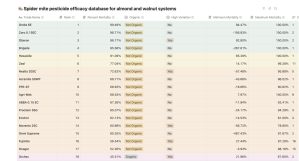
Spider mite pesticide efficacy database for almonds and walnuts
This database is derived from synthesized data of 19 different studies which assessed how pesticide type affects spider mite populations in almond and walnut systems,
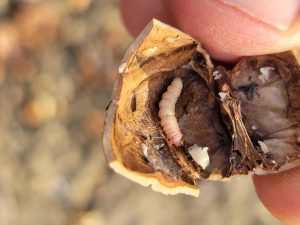
Costs and Benefits of Mating Disruption
Mating disruption is a selective, low-risk alternative for controlling codling moth and navel orangeworm. This study covers the costs and benefits of using mating disruption as a tool in walnut orchards.
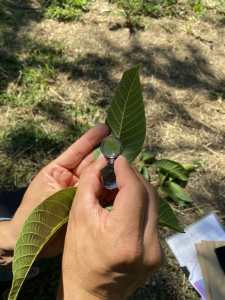
Video: Monitoring for Webspinning Spider Mites
Learn how to monitor for webspinning spider mites and protect your walnut orchard from damage using Integrated Pest Management guidelines. Watch the video below or
This project is funded by the California Department of Food and Agriculture (CDFA) Biologically Integrated Farming Systems (BIFS) program.