We recognize that there is no one-size-fits-all approach and that your recordkeeping practices have to fit your style of farming and comfort level with technology — in other words, they must work for you.
Why is record-keeping important?
Certifications:
Keeping records is required for food safety compliance and other certifications like organic, GAPs, etc. Allow yourself the opportunity to sell into new markets or get a higher price point for your crops!
Grants:
Grant applications (USDA, CDFA, or private) all require records. By keeping records, you will be more prepared to apply when grant opportunities or emergency relief funding comes around.
Keeping records helps keep your business viable:
For example, having organized sales data helps you review crop-by-crop revenue comparisons and assess profitability across different market channels.
Another example is having organized yield data to evaluate the impact of changing production practices, and communicating with new buyers about how much product you’ll have and when
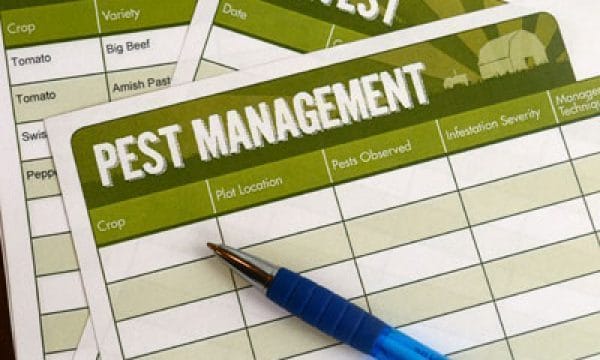
Recommendations for basic record-keeping
On-Farm Records:
- Sowing/transplant record (Date, variety, # of trays/rows/bed-feet)
- Input record (Date, product, brand name, quantity)
- Harvest record (Date, crop, quantity)
- Sales records (Date, crop, quantity, price, buyer name)
- Equipment sanitation logs
- Employee training logs
So… what’s a record and is it different from an SOP? 🤔
Receipts/Test Results:
- Seed purchase receipts
- Purchase receipts for compost, fertilizer, soil amendments, pesticides (brand name, source)
- Water test results
- Soil test results
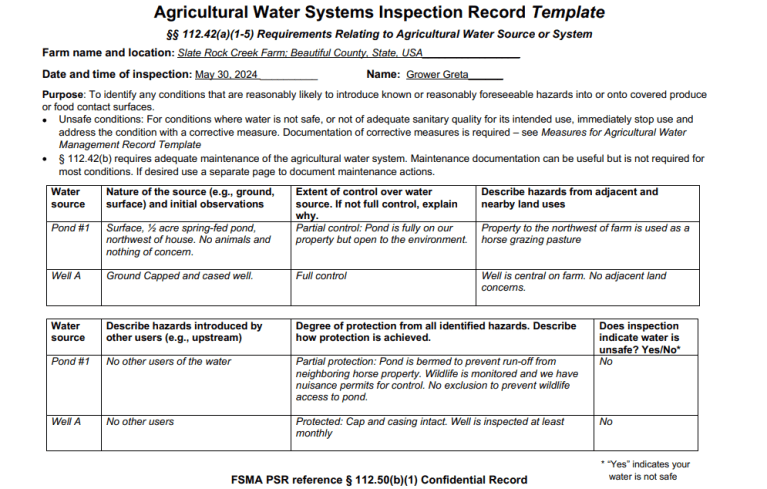
Record:
- past-oriented: for actions that already happened
- updated regularly, as the repeated action occurs
- include details such as:
- name of farm and farm location
- title of record
- date
- time
- initials of who was trained
- Manager/supervisor signature
SOP: Standard Operating Procedure
- future-oriented: protocols for course of action or articulation of processes
- plan for mitigating/correcting risks
- a recipe card for how carry out a procedure
- lists out ingredients (items needed)
- instructions (how to do it)
- updated at least annually or anytime there is a change in a procedure
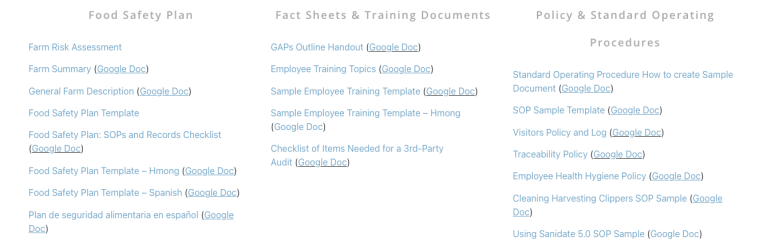
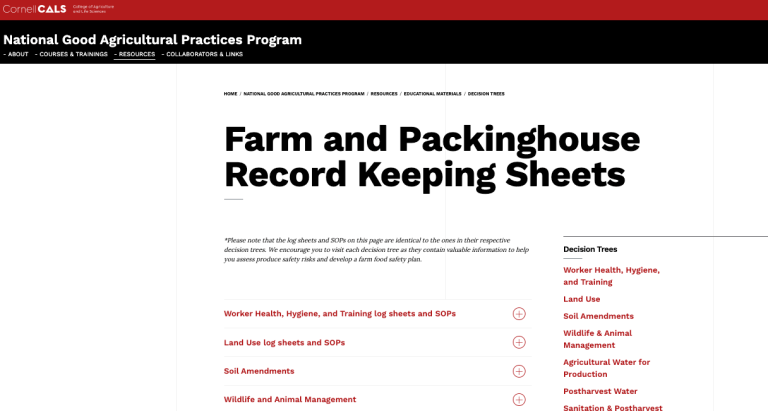
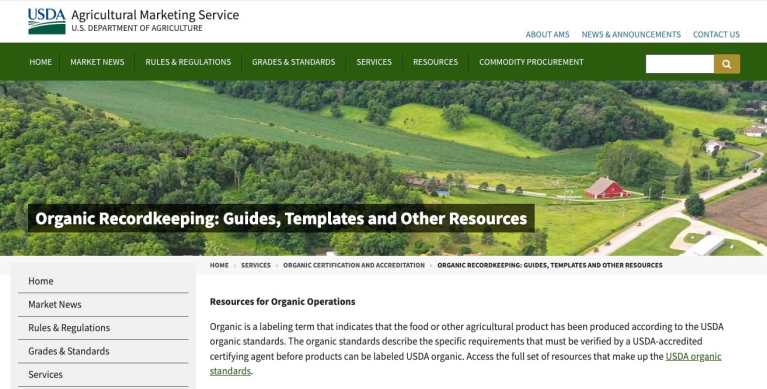
Templates are out there
There is no need to reinvent the wheel!
How can I do my farm record-keeping?
- Paper method: binders, notebooks, papers, receipts
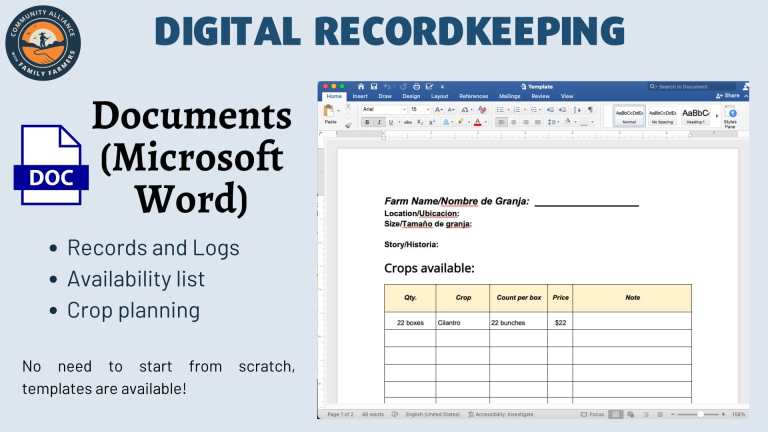
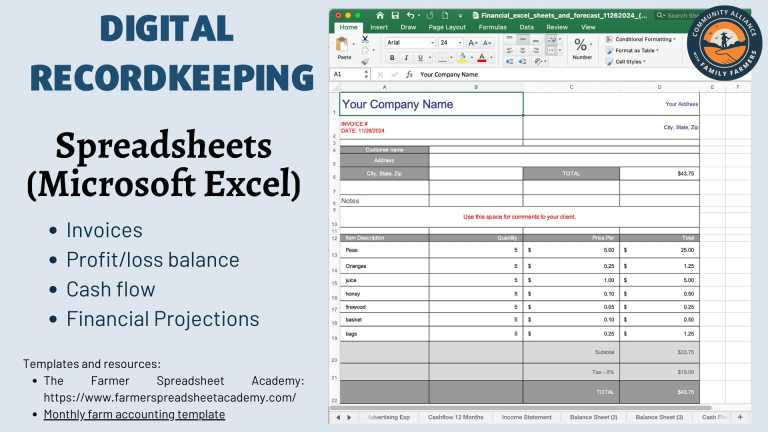
- Digital method: E.g. Microsoft Word and Excel, records live in your computer
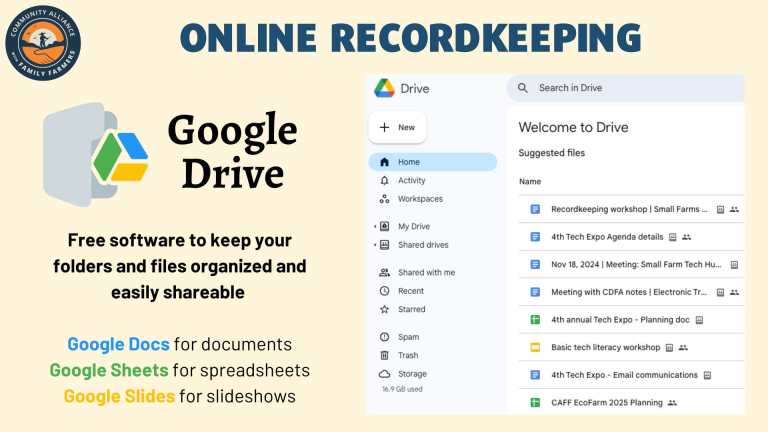
- Online method: E.g. Google Drive, records live in the “cloud”
Paper Recordkeeping
Pros
- More likely to get filled out, especially if the people working at a farm are not so into technology
- Easy to start!
Cons
- Can take longer to find necessary record during an inspection or audit
- Can’t access online or share over email
- Notebooks can get lost, or covered with soil if taken to the farm
Tips
- Keep records organized: by year and by category (production records, financial records, etc)
- Keep records for the required amount of time
- Take pictures of your farm periodically – useful for grant applications
Digital Recordkeeping
Pros
- No papers to sort out – easier to keep organized
- Financial records can be completed in less time with less human error
- Records live in your computer, or you can transfer them to a flash drive
Cons
- You need a computer to view and update your records (but you don’t need an internet connection!)
- If you are not used to working with a computer, the learning curve can be steep
Pros
- Your documents live in the “cloud”
- Easily shareable
- You can view and update your records on your phone
- Wide variety of tasks and resources
Cons
- You need internet connection
- Most software and apps have monthly subscription costs
- Some apps can have a steep learning curve and high setup times
The Big 3
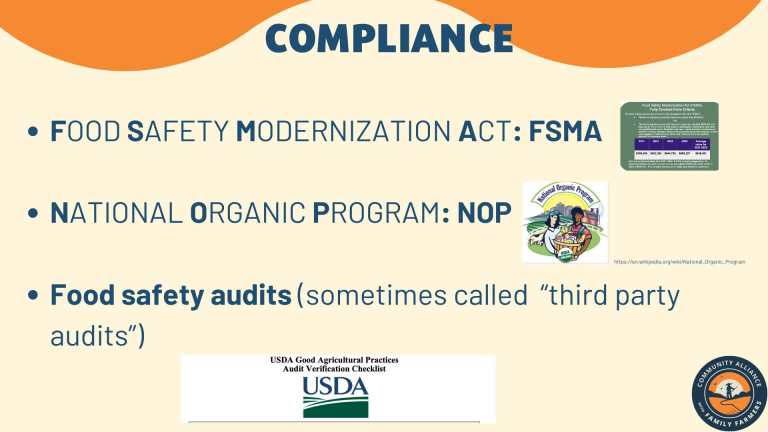
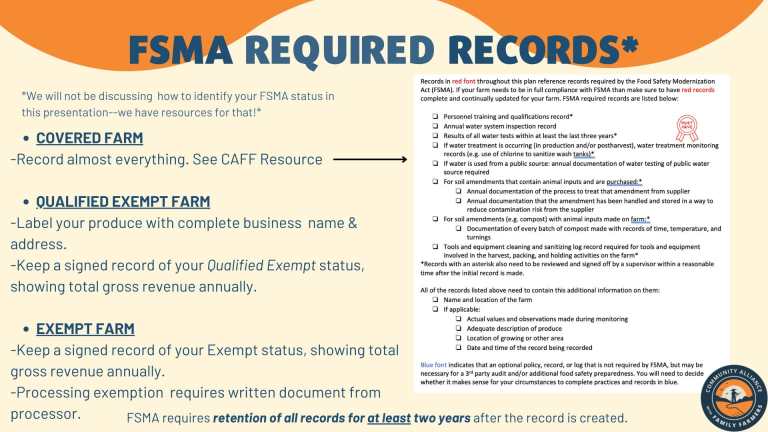
FSMA
- FEDERAL LAW
- inspected by CDFA’s Produce Safety Program (in CA)
- covers fresh produce that is ready to eat (usually consumed raw)
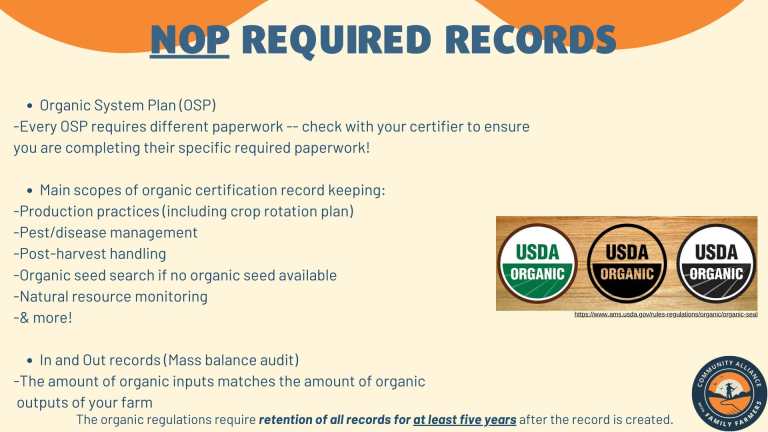
NOP
- VOLUNTARY
- inspected by different accredited certifying agents (e.g. CCOF)
- covers organic produce, livestock, and processing/handling
- paid for by the farmer
Food Safety Audits
- audited by private (“third party”) entities (e.g. USDA, Primus, CCOF)
- covers fresh produce
- paid for by the farmer